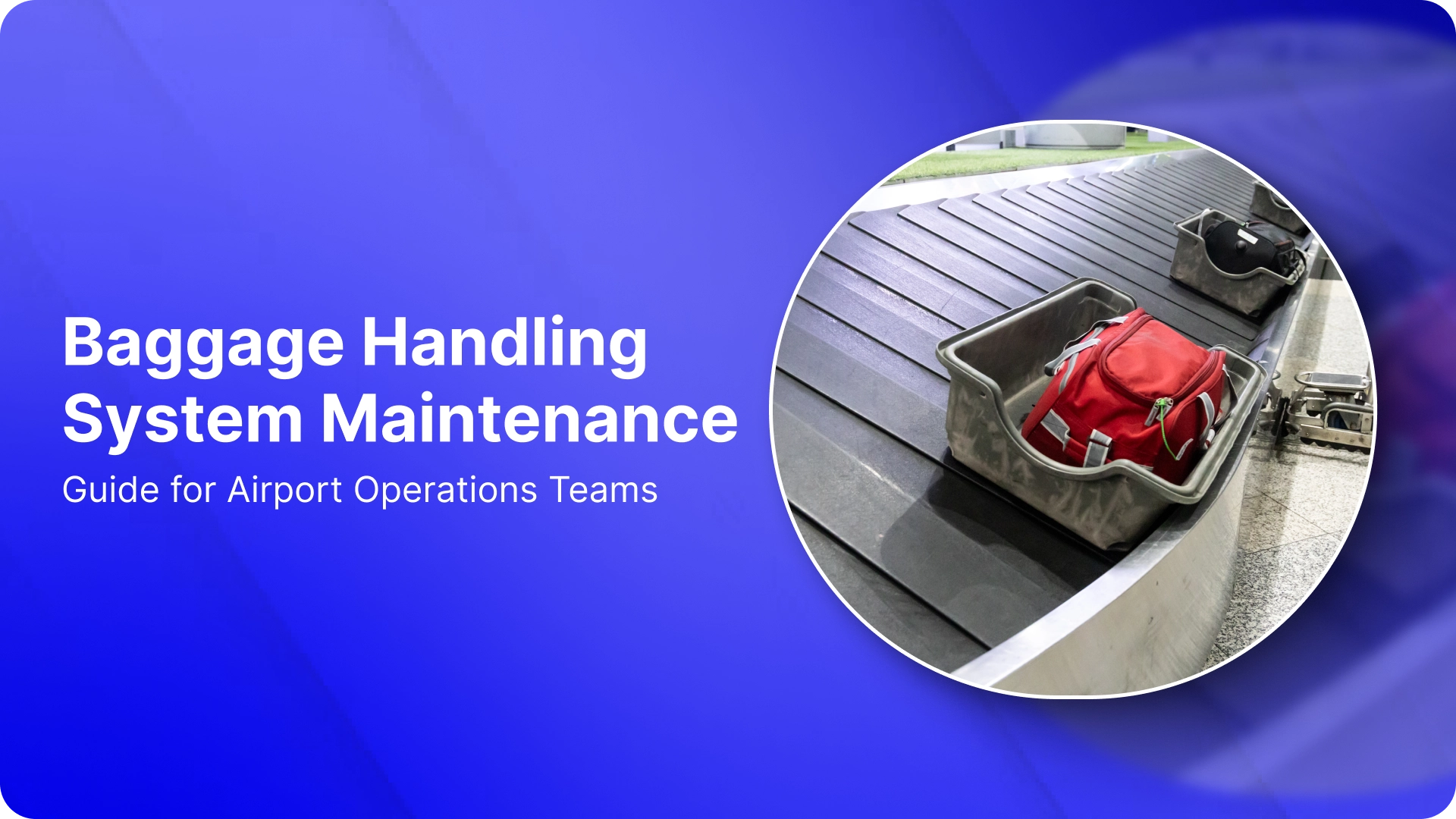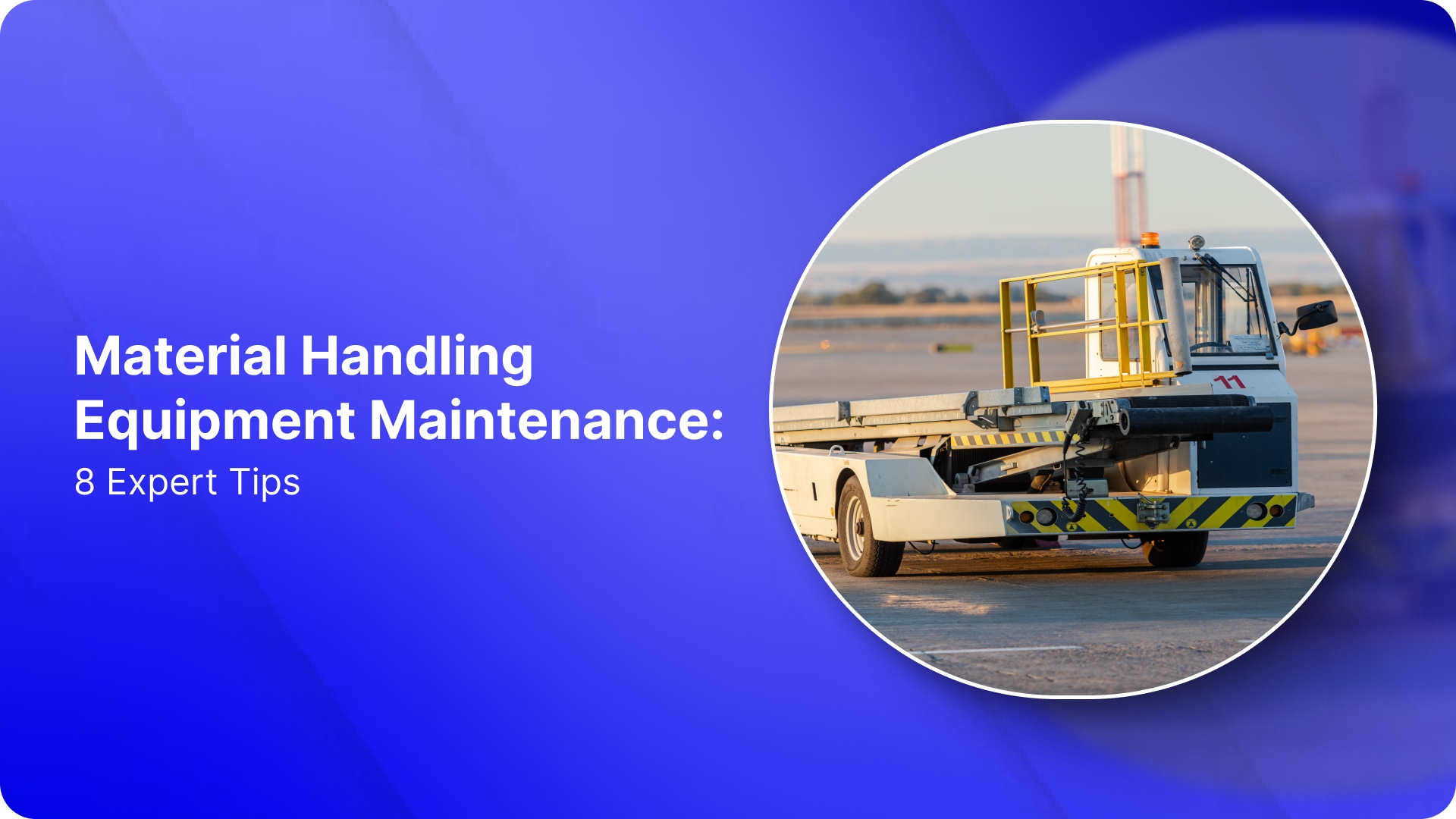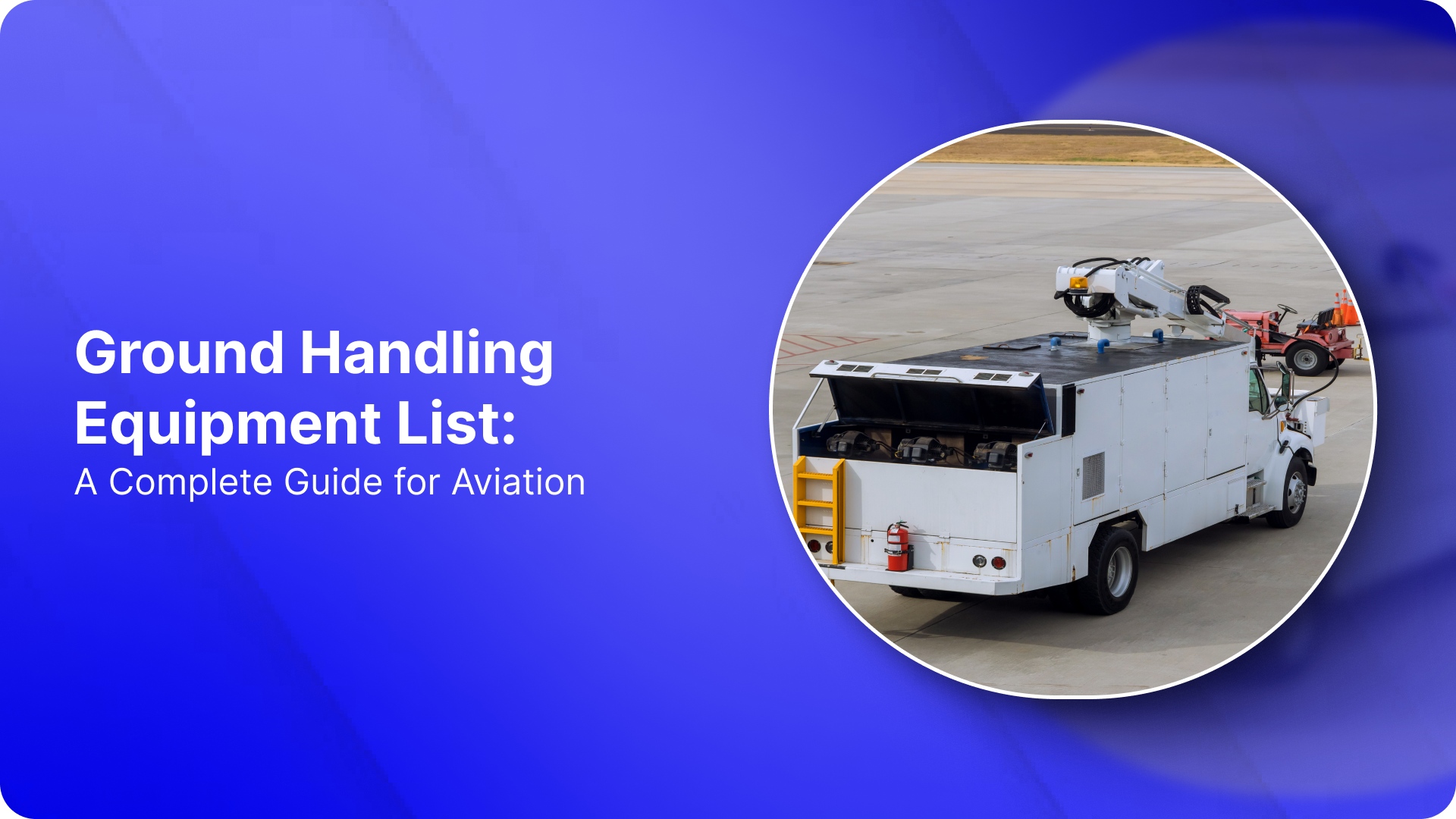
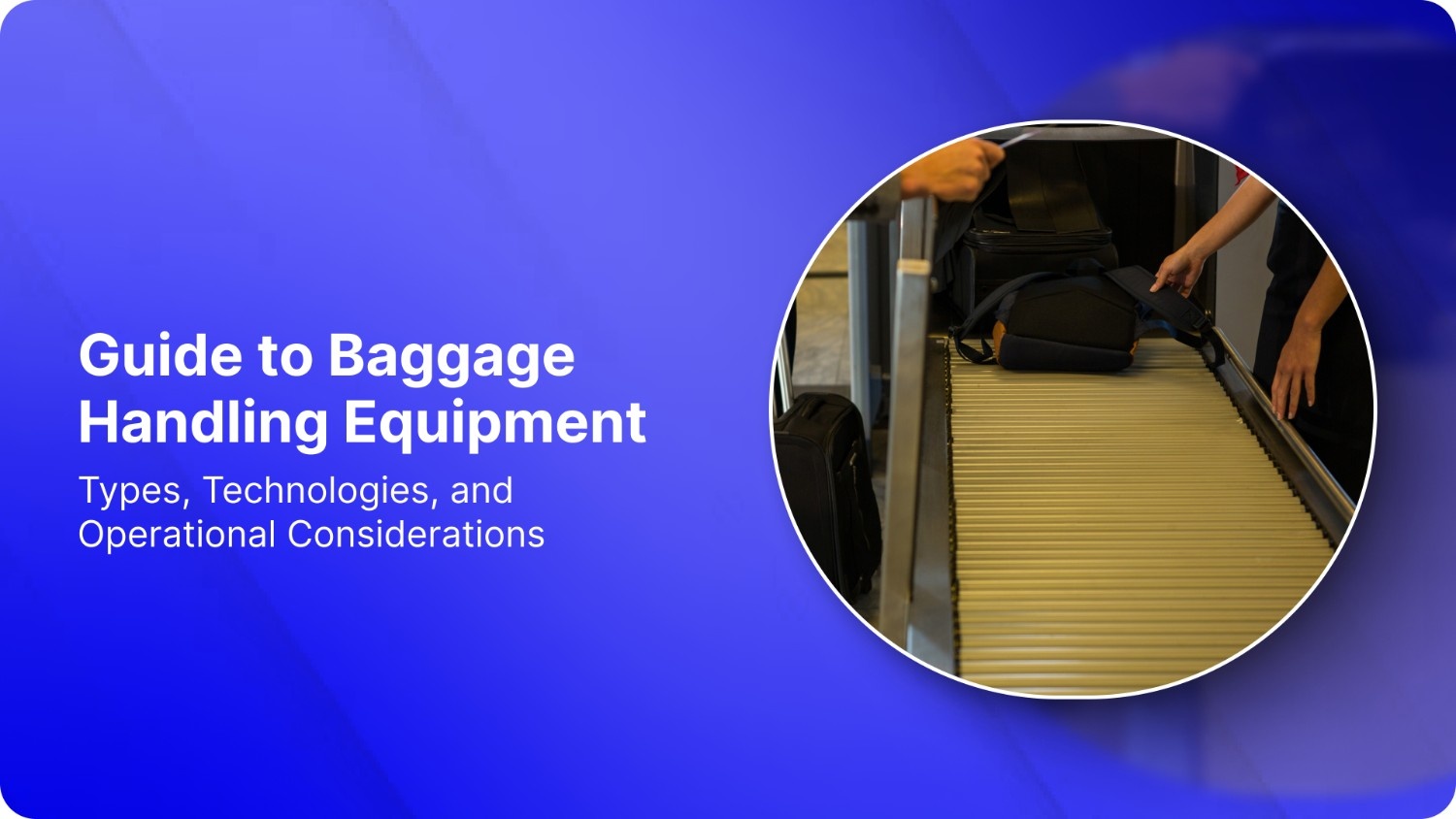
A single delayed bag can set off a chain reaction: crowded reclaim areas, missed connections, rebooking headaches, frustrated passengers, and ground teams stuck firefighting instead of operating smoothly. That’s why baggage handling systems (BHS) are mission-critical infrastructure for modern airports and high-throughput logistics hubs, they’re the unseen engine that keeps operations moving.
As passenger expectations rise and terminal operations grow more complex, the margin for error in baggage flow continues to shrink. Airports and logistics facilities need systems that move bags quickly, accurately, and reliably while adapting to peak loads and operational disruptions.
In this guide, you’ll learn the main types of BHS equipment, where each performs best (and where it falls short), and how to choose a system that balances efficiency, safety, and long-term scalability for your operation.
Key Highlights
BHS is critical to airport efficiency, preventing delays, reducing mishandling, and supporting growing global passenger volumes nearing 5 billion annually.
Integrated components, conveyors, sorters, scanners, and carousels work together to move, identify, screen, and route baggage with speed and accuracy.
Different equipment types serve different operational needs, from belt conveyors for long-distance transport to cross-belt sorters for high-volume hubs and advanced screening for security compliance.
Selecting the right system requires evaluating the total cost of ownership, scalability, security integration, and long-term performance rather than just upfront cost.
FSR Products strengthens baggage flow indirectly by supplying heavy-duty radiators for tugs, loaders, and other ground support equipment, ensuring reliability, reduced overheating, and consistent operations.
What is Baggage Handling Systems (BHS)?
A Baggage Handling System is an integrated network of mechanical, electrical, and digital components designed to transport, screen, sort, and deliver baggage automatically. Its primary purpose is to minimize manual handling while maximizing speed, accuracy, and traceability. By automating repetitive and time-sensitive tasks, BHS reduces human error, lowers labor strain, and supports compliance with aviation security regulations.
Key Components of a BHS
A typical BHS is made up of several interconnected elements, each playing a specific role:
Conveyors: The transport backbone of the system, moving bags across long distances and between processing points.
Sorters: Automated mechanisms that route baggage to the correct flight, pier, or reclaim area based on barcode or RFID data.
Scanners and Screening Systems: Security and identification units that read bag information and perform mandated inspections.
Carousels and Make-up Areas: The final interface where baggage is either reclaimed by passengers or prepared for aircraft loading.
Together, these components operate as a synchronized flow rather than isolated machines.
5 Types of Baggage Handling Equipment
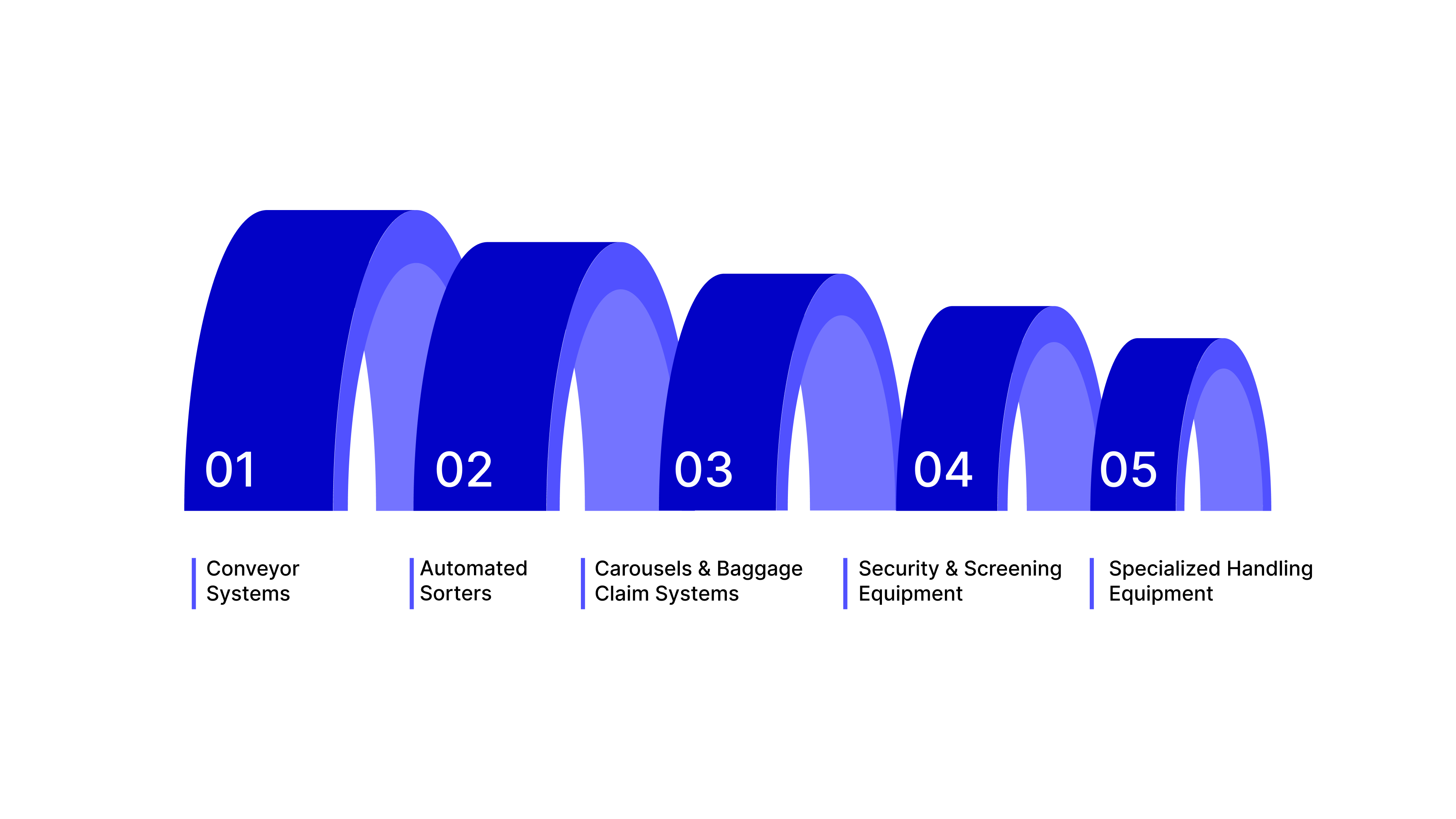
No two airports or logistics facilities operate under the same conditions. Passenger volume, terminal layout, security regulations, growth forecasts, and budget constraints all influence which baggage handling equipment makes the most sense.
1. Conveyor Systems
Conveyors are the foundation of any BHS, responsible for moving baggage between processing points.
Belt conveyors are the most widely used. They provide smooth, continuous movement, making them ideal for standard checked baggage and long transport distances. Their main drawback is higher maintenance if belts are poorly aligned or overloaded.
Roller conveyors use gravity or powered rollers and are often found in accumulation or make-up areas. They are robust and energy-efficient, but less suitable for irregularly shaped bags.
Modular conveyors consist of interlocking plastic modules. They offer flexibility in layout changes and easy replacement of damaged sections, though they typically come at a higher upfront cost.
2. Automated Sorters
Sorters direct bags to the correct flight, pier, or reclaim area with speed and precision.
Tilt-tray sorters gently tilt trays to discharge baggage and are known for reliability, though they require more space.
Cross-belt sorters use small belts mounted on carriers, enabling high accuracy and gentle handling, well-suited for transfer-heavy hubs.
High-speed sorters are designed for large volumes and tight connection windows but involve higher capital and integration costs.
3. Carousels and Baggage Claim Systems
At the passenger interface, carousel design strongly influences perception.
Standard (oval or racetrack) carousels are common and cost-effective.
Horizontal carousels maximize visibility and flow in larger reclaim halls.
Vertical carousel systems save floor space and are useful in constrained terminals, though they can limit simultaneous access.
4. Security & Screening Equipment
Security systems are tightly integrated into BHS to meet regulatory requirements.
X-ray scanners provide initial screening.
Explosives Detection Systems (EDS) offer advanced threat identification.
RFID readers improve tracking accuracy, reduce mishandling, and enhance traceability across the journey.
5. Specialized Handling Equipment
Not all baggage fits standard flows.
Trolleys, lifts, and carts are used for oversized, heavy, or fragile items such as sports gear or musical instruments.
These tools ensure safe handling while preventing bottlenecks in automated lines.
Together, these equipment types form a modular toolkit, allowing airports and facilities to build BHS solutions tailored to their operational reality and future growth.
Pros and Cons of Major Baggage Handling Technologies
Choosing the right baggage handling technology is rarely about finding a “best” option; it’s about finding the right fit for operational volume, terminal layout, service expectations, and long-term strategy. A side-by-side comparison helps clarify where each technology delivers value and where trade-offs exist.
Conveyors vs. Automated Sorters
This comparison highlights the trade-off between simplicity and advanced routing capability in baggage movement systems.
Aspect | Conveyors | Automated Sorters |
|---|---|---|
Primary Function | Transport baggage between points | Sort baggage to specific destinations |
Pros | Lower cost, simple design, easy to maintain | High accuracy, faster routing, scalable for high volumes |
Cons | Limited decision-making capability, slower for complex routing | Higher capital cost, complex integration |
Best For | Small to medium airports, linear layouts | Large hubs, transfer-heavy operations |
Traditional Carousels vs. High-Speed Baggage Claim Systems
Baggage claim systems directly influence passenger perception and terminal congestion during peak periods.
Aspect | Traditional Carousels | High-Speed Claim Systems |
|---|---|---|
Passenger Experience | Familiar, simple to use | Faster delivery, reduced crowding |
Pros | Cost-effective, proven reliability | Improved throughput, shorter wait times |
Cons | Congestion during peak periods | Higher installation and maintenance cost |
Best For | Low to moderate passenger volumes | High-volume or premium terminals |
Manual vs. Fully Automated Systems
The level of automation determines labor dependency, consistency, and long-term operational efficiency.
Aspect | Manual Handling | Fully Automated BHS |
|---|---|---|
Labor Dependency | High | Low |
Pros | Lower upfront cost, flexible | Consistent performance, fewer errors |
Cons | Higher long-term labor costs, error-prone | Higher initial investment, system complexity |
Best For | Small facilities, limited budgets | Large airports, long-term scalability |
Security Integration Capabilities
Security integration defines how effectively a BHS meets regulatory requirements while maintaining throughput.
Technology Level | Advantages | Limitations |
|---|---|---|
Basic Screening Integration | Lower cost, simpler compliance | Limited threat detection |
Advanced Integrated Security (EDS, RFID) | Higher security, better traceability, fewer manual checks | Increased cost, requires skilled maintenance |
Case Studies / Real-World Implementations
Real-world deployments show how different baggage handling technologies perform at scale.
Example: Heathrow Airport – High-Speed Automated Sorters
As one of the world’s busiest international hubs, Heathrow relies heavily on high-speed automated sorting systems to manage large transfer volumes and tight connection windows. Cross-belt and high-capacity sorter technologies allow baggage to be routed accurately across multiple terminals in real time.
This automation reduces misrouting risk, supports short minimum connection times, and helps the airport maintain reliability despite constant peak-period pressure.
Choosing the Right Baggage Handling Equipment

Selecting the right baggage handling equipment is a strategic decision for airports and large logistics hubs, impacting efficiency, compliance, and long-term operational costs.
Matching Equipment to Facility Size & Traffic: Smaller or regional facilities typically perform well with conveyor-based or semi-automated systems, while high-traffic international hubs require high-speed sorters and advanced automation to manage peaks and transfers efficiently.
Budgeting and Total Cost of Ownership: Lower upfront costs may lead to higher long-term expenses due to labor, maintenance, and downtime. A total cost of ownership (TCO) approach helps compare systems based on lifecycle cost, reliability, and efficiency gains.
Budgeting and Total Cost of Ownership: Lower upfront costs may lead to higher long-term expenses due to labor, maintenance, and downtime. A total cost of ownership (TCO) approach helps compare systems based on lifecycle cost, reliability, and efficiency gains.
Integrating Security & Compliance Requirements: Seamless integration of screening technologies and tracking solutions ensures regulatory compliance while maintaining throughput and avoiding operational bottlenecks.
How FSR Products Supports Airport & Logistics Operations
Reliable baggage handling depends on the uninterrupted performance of ground support equipment (GSE). FSR Products contributes to this operational backbone by manufacturing radiators and cooling solutions specifically designed for demanding ground support and industrial applications.
Specialized Radiators for Ground Support Equipment: FSR Products manufactures radiators for ground support and industrial vehicles, including equipment commonly used in airport and logistics environments, such as baggage tugs, belt loaders, forklifts, and cargo-handling vehicles.
Designed for High-Load Operating Conditions: The company focuses on cooling systems built to operate under heavy-duty and high-heat conditions, which are typical in continuous-use airport ground operations.
Made in the USA Manufacturing: All radiators are manufactured in the United States, emphasizing build quality, durability, and controlled production standards.
Supports Equipment Reliability and Service Life: Proper engine cooling helps reduce overheating risks and supports consistent equipment operation, an important factor for maintaining steady baggage flow and minimizing ground delays.
FSR Products does not manufacture core baggage handling systems such as conveyors or sorters. However, its cooling solutions support the ground equipment that interfaces with baggage handling operations, helping maintain uptime and operational continuity across the broader airport handling ecosystem.
Conclusion
Choosing the right baggage handling equipment is essential for maintaining efficiency, safety, and a positive passenger experience. From conveyors and sorters to security integration and ground support systems, each technology choice plays a role in overall system reliability and long-term performance.
Decision-makers should carefully balance cost, capacity, scalability, and technology rather than focusing only on upfront investment. Evaluating the total cost of ownership and future operational demands helps ensure that today’s choices remain effective as volumes grow and requirements evolve.
For reliable support equipment cooling solutions that contribute to consistent ground operations, connect with FSR Products. Contact FSR Products to discuss application-specific radiator solutions designed to support uptime and operational efficiency.
FAQ
1. Why is choosing the right BHS equipment important?
The right equipment improves operational efficiency, reduces baggage mishandling, enhances safety, and directly impacts passenger satisfaction and on-time performance.
2. How do I choose the right baggage handling equipment for my facility?
Equipment selection should be based on passenger volume, facility layout, budget, security requirements, and future growth. Evaluating the total cost of ownership and scalability is critical.
3. What is the difference between conveyors and automated sorters?
Conveyors move baggage between points, while automated sorters intelligently route bags to specific destinations. Sorters offer higher speed and accuracy but come with higher investment costs.
4. Why should airports work with specialized BHS and GSE vendors?
Specialized vendors understand operational challenges and can provide tailored, application-specific solutions that improve reliability, efficiency, and long-term return on investment.
5. How does ground support equipment affect baggage handling operations?
Ground support equipment, like baggage tugs and loaders, directly interfaces with BHS. Reliable performance of this equipment is crucial to maintaining smooth baggage flow and avoiding delays.