Is your material handling equipment ready for the demanding, high-pressure environment of airport ground support? Maintenance is key to ensuring your equipment runs smoothly, but too often, it's overlooked, leading to costly downtime and repair bills.
Whether it's your radiator systems or conveyors, proper maintenance of material handling equipment is crucial. Without regular checks, small issues can snowball into serious problems that disrupt operations at critical moments.
In this guide, let's look into expert tips that focus on preventing these issues, enhancing performance, and reducing unexpected breakdowns. From routine inspections to preventative measures, this article will help you protect your assets and extend their life.
Key Takeaways
Regular maintenance reduces downtime, extends equipment life, and ensures safe operation, especially in demanding environments like airports.
Routine inspections of critical systems, like radiators and motors, help catch small issues early.
Preventive maintenance schedules prevent costly repairs and address issues like overheating.
Using genuine parts and real-time monitoring, such as IoT sensors, helps detect issues before they cause breakdowns.
A detailed maintenance log tracks repairs and optimizes future maintenance decisions.
Why is Regular Maintenance Important for Material Handling Equipment?
Material handling equipment is the backbone of airport ground operations. Whether it's pushback tugs, baggage handling systems, or fuel tankers, any unexpected breakdown can halt your entire workflow.
Regular maintenance ensures your equipment operates efficiently, keeping airport operations running smoothly.
Key Benefits of Regular Maintenance:
Minimized Downtime: Regular inspections help catch small issues like leaking hydraulic lines or clogged air filters before they turn into significant problems, ensuring equipment stays operational without sudden halts.
Extended Equipment Life: Regular cleaning of radiator fins, checking coolant levels, and replacing worn-out gaskets can prevent overheating, helping equipment last beyond its expected lifecycle without requiring costly replacements.
Improved Efficiency: Consistent lubrication of moving parts in material handling systems reduces friction and wear, ensuring that conveyor belts or tug engines operate smoothly, with minimal energy loss.
Improved Safety Compliance: Maintenance helps ensure that key safety systems, such as braking systems and electrical safety relays, are functional and compliant with industry standards, reducing the risk of accidents and regulatory violations.
Optimized Cooling Performance: Timely checks on coolant temperature and radiator performance ensure that engine temperatures remain within operational limits, preventing overheating in critical machinery like baggage carts and fuel trucks.
Regular maintenance helps optimize the efficiency of your equipment, but knowing how to properly implement maintenance strategies is equally crucial.
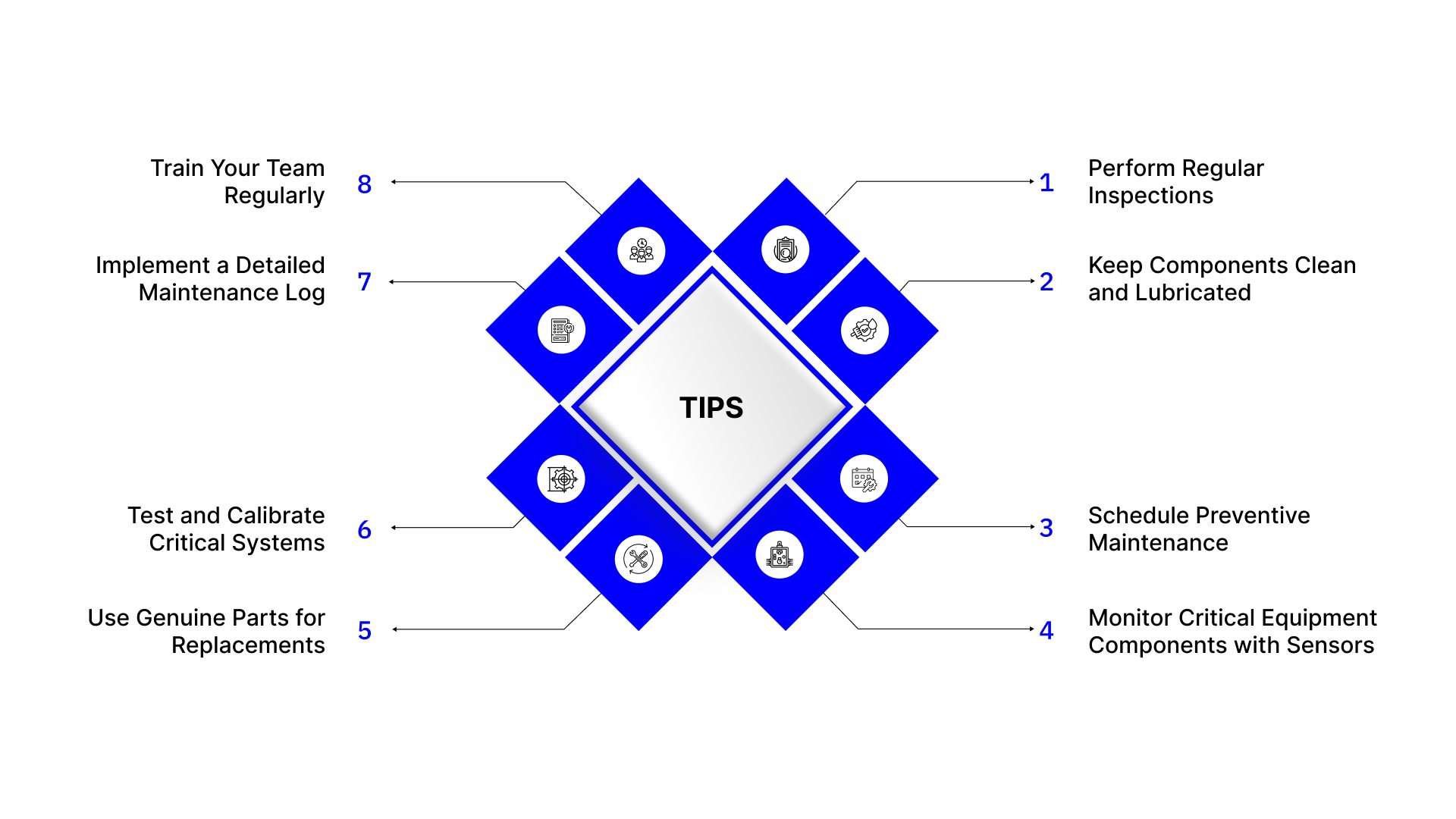
Top 8 Tips for Material Handling Equipment Maintenance
Proper maintenance of material handling equipment is essential to keep airport ground operations running smoothly. From routine inspections to preventive measures, following best practices can extend equipment life, minimize downtime, and reduce costly repairs.
Here are the top 8 expert tips to ensure your equipment stays in peak condition.
Tip 1: Perform Regular Inspections
Why It Matters:
Regular inspections are essential to identify early signs of wear and tear. Small issues like leaks, cracks, or clogged filters can escalate into major failures if not addressed early, leading to costly downtime and repairs.
How to Do It:
Conduct daily or weekly inspections of critical components like radiators, hydraulic lines, filters, and belt tension.
Use visual checks and functional tests to ensure everything is operating as expected.
What is required:
Inspection checklist: Include key components such as cooling systems, filters, and drive belts.
Tools: Flashlight, inspection mirrors, pressure gauges for hose checks, and torque wrenches for bolts.
Tip 2: Keep Components Clean and Lubricated
Why It Matters:
Dirty or improperly lubricated parts increase friction, leading to faster wear and potential breakdowns. For instance, dirty radiator fins can obstruct airflow, causing the engine to overheat.
How to Do It:
Clean radiators, air filters, and exposed belts regularly using compressed air or soft-bristle brushes.
Lubricate moving parts like rollers and motors with the recommended oils and greases.
What is required:
Lubricants: Use high-quality grease or oil specified by the manufacturer.
Cleaning supplies: Compressed air, soft-bristle brushes, and cleaning solvents for stubborn dirt.
Tip 3: Schedule Preventive Maintenance
Why It Matters:
A proactive approach reduces the risk of unexpected breakdowns. For example, regular checks on coolant levels and radiator performance help prevent overheating, which is a leading cause of engine failure in ground support equipment.
How to Do It:
Establish a maintenance calendar that includes monthly, quarterly, and annual checks.
Ensure that all critical components, including radiators, filters, and cooling systems, are checked at specified intervals.
What is required:
Calendar software to schedule checks and maintenance tasks.
Maintenance logs to document each task, part replacement, and inspection result.
Tip 4: Monitor Critical Equipment Components with Sensors
Why It Matters:
Real-time monitoring can catch issues like temperature spikes or vibration anomalies before they cause a breakdown. For example, a sensor detecting an overheating radiator can prompt immediate action, preventing engine damage.
How to Do It:
Install IoT-enabled sensors on critical components like motors, cooling systems, and hydraulic pumps to track temperature, pressure, and vibration. Set alerts for any anomalies that require immediate attention.
What is required:
IoT sensors: For temperature, pressure, and vibration monitoring.
Dashboard: A system to track real-time data and set alerts for thresholds.
Tip 5: Use Genuine Parts for Replacements
Why It Matters:
Using non-genuine parts can compromise the performance of your equipment. For instance, a substandard radiator hose may not fit correctly, leading to leaks or overheating, which compromises the entire system.
How to Do It:
Always use OEM (Original Equipment Manufacturer) parts for replacements, ensuring compatibility with the specific equipment and avoiding performance issues. Order parts directly from the manufacturer or certified suppliers.
What is required:
Parts inventory: Keep a stock of critical components like radiator hoses, gaskets, and filters.
Supplier relationships: Maintain a relationship with trusted OEM suppliers for reliable parts.
Tip 6: Test and Calibrate Critical Systems
Why It Matters:
Systems like braking or steering are essential for safety. Regular testing ensures that all safety features are functioning as intended, and calibration ensures accurate performance under operational stress.
How to Do It:
Test the functionality of braking systems, temperature sensors, and conveyor belts for proper alignment. Calibrate sensor readings for radiator temperature and pressure gauges as per the manufacturer's guidelines.
What is required:
Test equipment: Pressure testers for hydraulic systems, alignment tools for conveyor belts, and calibration kits for temperature sensors.
Checklist for regular testing of critical systems.
Tip 7: Implement a Detailed Maintenance Log
Why It Matters:
A detailed maintenance log tracks all repairs, inspections, and part replacements, providing a historical record that helps identify recurring issues and future needs. This data can improve decision-making for equipment upgrades and replacement cycles.
How to Do It:
Create a digital or paper log to track every maintenance activity. Document the part replaced, inspection results, and any issues detected or resolved. This ensures easy access to past maintenance data for analysis.
What is required:
Log template: Use a digital tool or a simple spreadsheet to track each task performed.
Documentation system: A cloud-based platform or software for accessing and updating logs remotely.
Tip 8: Train Your Team Regularly
Why It Matters:
Properly trained staff are essential to efficient maintenance and safety. Untrained personnel may overlook vital checks or fail to recognize early signs of malfunction, potentially causing system failures.
How to Do It:
Conduct regular training sessions on maintenance procedures, safety standards, and equipment-specific needs. Ensure that your team understands how to properly inspect, clean, lubricate, and replace parts.
What is required:
Training programs: Workshops or online courses on maintenance best practices.
Safety guidelines: Ensure that all staff are trained in safety procedures related to handling heavy equipment and hazardous materials.
By implementing these practical tips, you can improve the performance and reliability of your material handling equipment.
Let’s explore the key pitfalls to avoid when maintaining your material handling equipment.
5 Common Maintenance Mistakes to Avoid
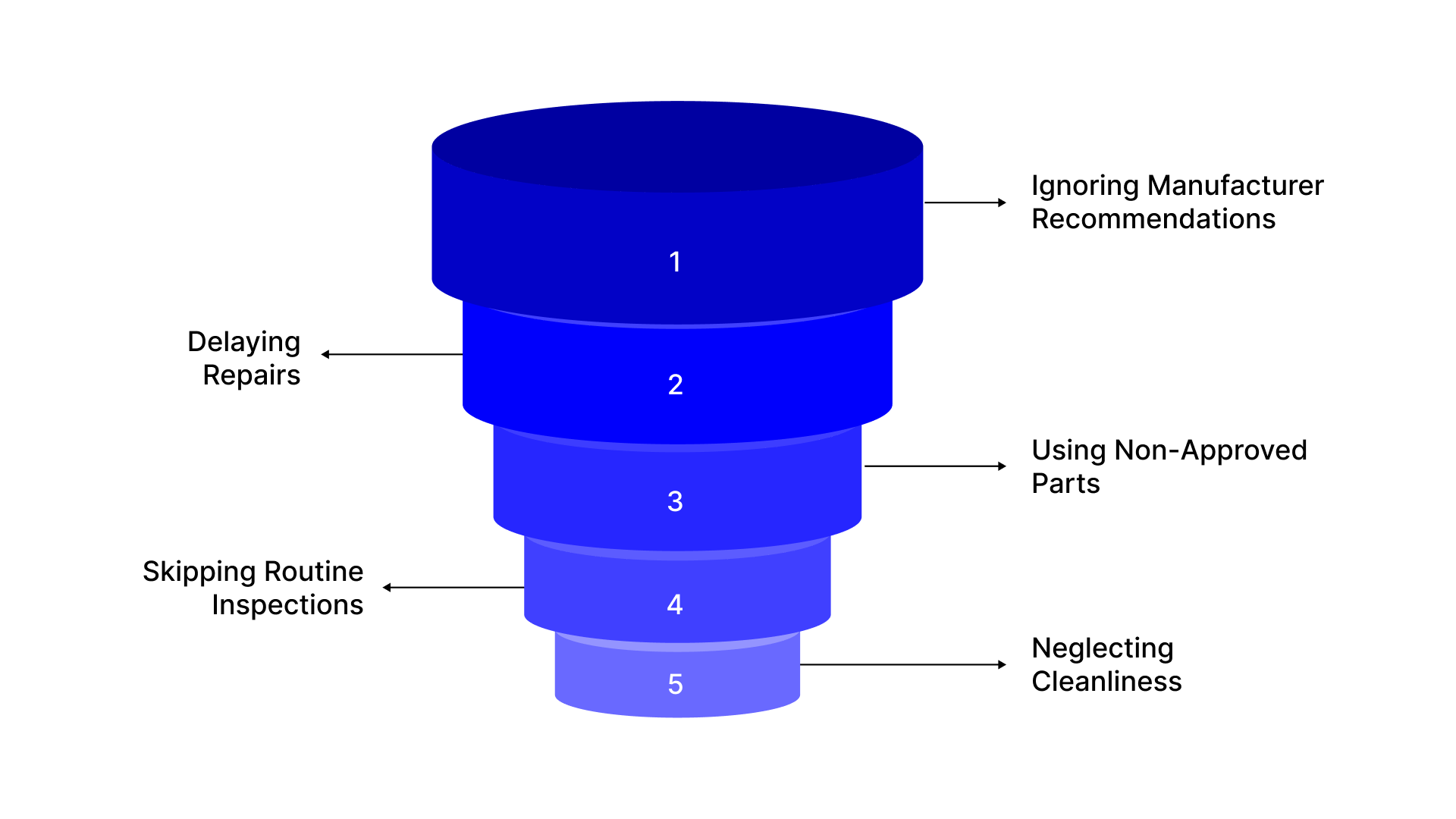
Even with the best intentions, certain maintenance mistakes can cause more harm than good. From neglecting routine checks to using the wrong parts, these errors can lead to costly breakdowns and unsafe equipment.
Here are some of the most common maintenance mistakes and how to avoid them.
Mistake 1: Ignoring Manufacturer Recommendations
How to Overcome: Always follow the manufacturer's guidelines for maintenance intervals and part specifications to avoid compatibility issues and performance decline.
Mistake 2: Delaying Repairs
How to Overcome: Address minor issues immediately to prevent them from becoming major problems. Implement a quick-response maintenance team for urgent repairs.
Mistake 3: Using Non-Approved Parts
How to Overcome: Only use genuine, manufacturer-approved parts to ensure proper functionality and avoid causing long-term damage.
Mistake 4: Skipping Routine Inspections
How to Overcome: Set up a consistent inspection schedule to check key components like radiators, belts, and hydraulic systems regularly.
Mistake 5: Neglecting Cleanliness
How to Overcome: Regularly clean components such as radiator fins, filters, and engines to prevent dirt build-up that could lead to overheating or performance issues.
Now that you know what to avoid, let’s explore how you can implement a strong, proactive maintenance plan to optimize your equipment's performance.
How to Choose the Right Maintenance Plan for Your Equipment
Choosing the right maintenance plan for your material handling equipment is critical for long-term efficiency and cost savings. A well-designed plan helps prevent costly repairs and ensures that equipment performs reliably when needed most.
Here's a guide to help you select the best approach for your operations:
Factor | In-House Maintenance | Outsourced Maintenance |
Cost | Lower initial cost but requires internal resources and equipment. | Higher upfront costs but less labor-intensive for your team. |
Equipment Complexity | Suitable for simpler equipment with low complexity. | Ideal for complex equipment requiring specialized knowledge. |
Skills & Expertise | Requires skilled in-house technicians. | Provides access to expert technicians and manufacturers. |
Flexibility | Offers flexibility in scheduling and repairs. | Less flexible, depends on third-party availability. |
Control & Documentation | Full control over the process and detailed record-keeping. | Third parties handle documentation and records. |
Now that you have the right plan in place, let's look at how FSR Products can help you maintain equipment reliability with custom solutions.
FSR Products: A Partner in Equipment Reliability
At FSR Products, we specialize in providing custom radiators for airport ground support equipment. Our products are designed to improve equipment performance and reduce maintenance costs. With a focus on durability and reliability, we help extend the lifespan of critical equipment.
What We Provide:
Custom Radiators for ground support equipment like pushback tugs and fuel tankers.
Durability: Built to withstand harsh operating conditions and prevent overheating.
Personalized Solutions: Engineered to meet the specific cooling needs of each piece of equipment.
High-Quality Materials: Only premium-grade materials are used to ensure long-term reliability.
Partnering with us ensures your equipment operates efficiently, with fewer breakdowns and lower maintenance costs, keeping your operations running smoothly.
Final Thoughts
Regular maintenance ensures material handling equipment runs smoothly, preventing costly repairs and downtime. By implementing expert tips and avoiding common mistakes, you can extend equipment life and maintain efficiency.
FSR Products specializes in custom radiators for airport ground support equipment, designed for reliability and optimal performance. Our solutions help reduce maintenance costs and improve equipment longevity.
Contact us today to learn how our custom radiators can improve your equipment's reliability.
FAQs
How often should material handling equipment be inspected?
Routine inspections should be done at least once a week, with a more detailed inspection performed monthly. Depending on equipment usage, you may need to adjust the frequency to ensure optimal performance.
What are the signs of an overheating radiator in material handling equipment?
Signs include high engine temperatures, unusual smells, and poor cooling performance. If the radiator system shows these signs, immediate attention is needed to avoid engine failure.
How can I improve the energy efficiency of my material handling equipment?
Regularly clean and lubricate moving parts to reduce friction. Ensuring that your cooling systems are functioning optimally also prevents unnecessary energy consumption.
Can improper lubrication affect material handling equipment?
Yes, improper lubrication can cause excessive wear, leading to overheating and premature failure of moving parts. Proper lubrication is crucial for ensuring smooth operation.
Why is using non-approved parts risky for material handling equipment?
Non-approved parts may not fit correctly or meet the required standards, leading to inefficiency, increased wear, and potential equipment failure. Always use manufacturer-recommended parts for optimal performance.