If you are responsible for maintaining equipment or approving replacement parts, you have likely faced this question more than once: Are replacement parts as good as OEM parts?
It often comes up when an OEM part has a long lead time, limited availability, or internal pressure to keep equipment running.
This is not a theoretical question. It is usually tied to accountability. You are weighing reliability, risk, and long-term impact on equipment uptime, not just whether a part fits.
This guide is designed to help you evaluate that decision clearly. It does not argue for or against OEM or non-OEM parts. Instead, it breaks down what OEM actually means, when OEM replacement parts make sense, when alternatives can perform just as well, and how to assess suitability without relying on labels alone.
Key Takeaways
OEM is an origin, not a quality guarantee. OEM status explains where a part comes from, not how it will perform in every replacement scenario.
The real risk is a mismatch. Most repeat failures happen because a part is not designed for the current operating conditions.
Replacement intent matters. Parts designed for replacement use may perform more predictably than original-build components.
Evaluation beats assumptions. Clear, structured evaluation reduces downtime risk and supports defensible decisions.
What “OEM” Really Means in Replacement Parts?
OEM stands for Original Equipment Manufacturer. In replacement parts, this typically means the part comes from the same manufacturer that supplied the original component installed on the equipment.
What OEM status usually provides
OEM replacement parts often offer:
Alignment with the original equipment design
Predictable fitment and interfaces
Traceability to original documentation or part numbers
This can reduce uncertainty, especially when equipment is still closely tied to its original configuration.
What OEM status does not guarantee
OEM does not automatically ensure:
Better performance in all operating conditions
Suitability for changed duty cycles or environments
Immunity from repeat failures
OEM parts are primarily designed for original builds. Replacement use is not always the primary design focus.
What People Usually Mean When They Ask “Are Replacement Parts as Good as OEM?”
When this question is asked, it is rarely about curiosity. It is usually driven by risk management and accountability.
What you are often trying to determine
In practice, you are asking:
Will this replacement part perform reliably over time?
Will it fit and function without creating secondary issues?
Will this decision stand up to internal review if something goes wrong?
The concern is not the label. It is the outcome.
Why OEM feels like the safe default
OEM is often perceived as safer because:
It is easier to justify internally
It aligns with existing policies or habits
It reduces perceived personal accountability
This can make OEM the default choice even when the real concern is suitability, not origin.
The real issue behind the question
Most replacement decisions fail not because a part was non-OEM, but because:
The part was not designed for the current operating conditions
The replacement context was not fully considered
Understanding this helps shift the conversation from OEM vs aftermarket to fit for purpose.
When OEM Replacement Parts Are the Right Choice?
There are situations where OEM replacement parts are the most appropriate option. In these cases, the decision is driven by constraints and risk boundaries, not preference.
Situations where OEM replacement parts make sense
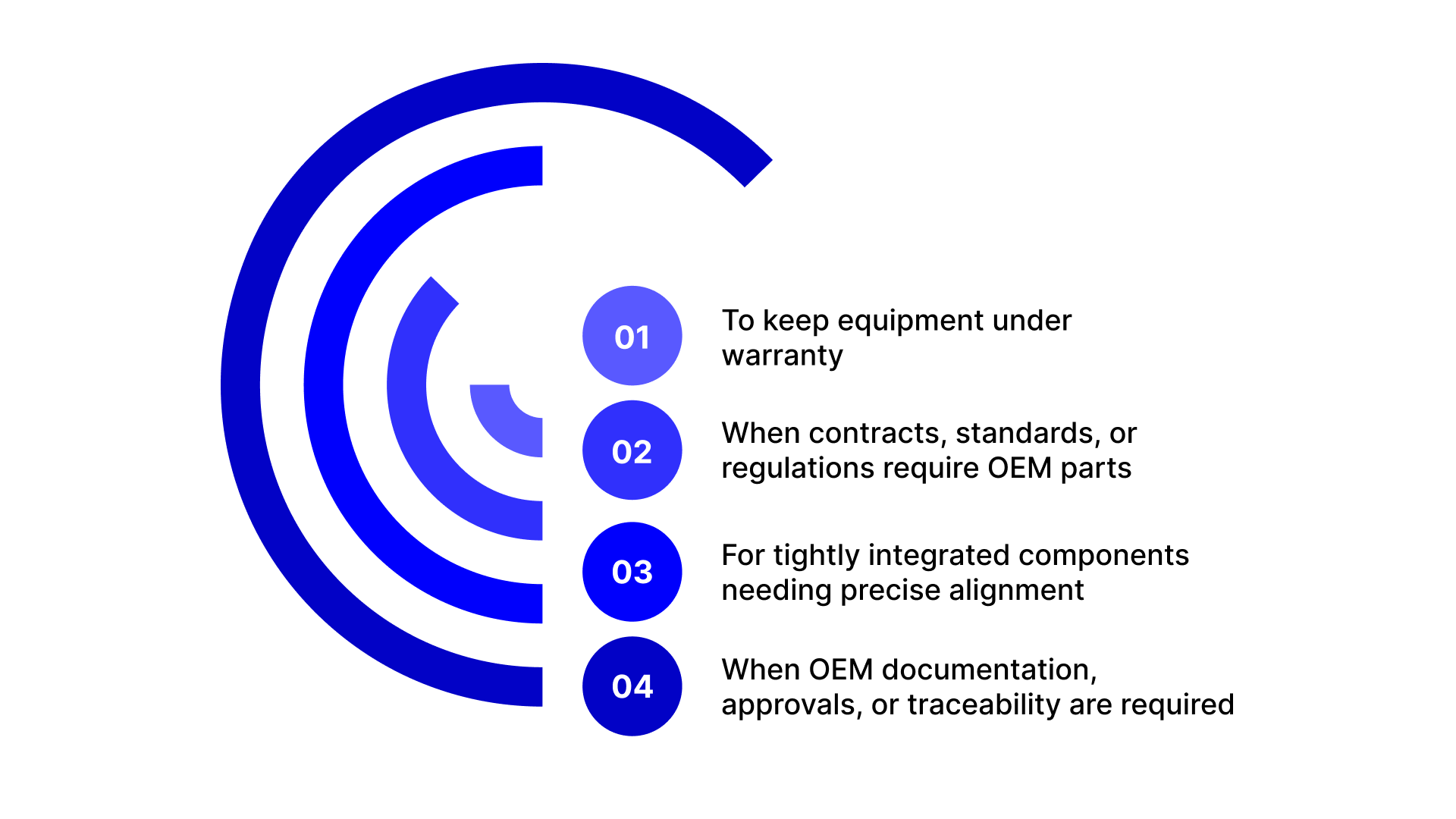
OEM replacement parts are typically the right choice when:
Equipment is under warranty, and OEM parts are required to maintain coverage
Contracts, internal standards, or regulations specify the purchase of OEM replacement parts only
The component interfaces tightly with other systems, where alignment is critical
The OEM controls documentation, approvals, or traceability.
In these scenarios, OEM helps reduce procedural and compliance risk.
Why OEM can lower decision risk
OEM replacement parts can simplify:
Internal justification and audits
Change management and approvals
Accountability when issues arise
This does not mean OEM parts are always superior. It means they can be the safer option when deviation introduces additional risk beyond performance alone.
How to use this insight
For you, the key is to identify whether OEM is required by structure or policy. If it is, the decision is clear. If it is not, additional evaluation becomes possible.
When Non-OEM Replacement Parts Can Perform Equally Well?
Non-OEM replacement parts can perform as well as OEM parts in specific, well-defined situations. The key factor is how the part is designed and intended to be used, not whether it carries an OEM label.
Situations where non-OEM parts can be suitable
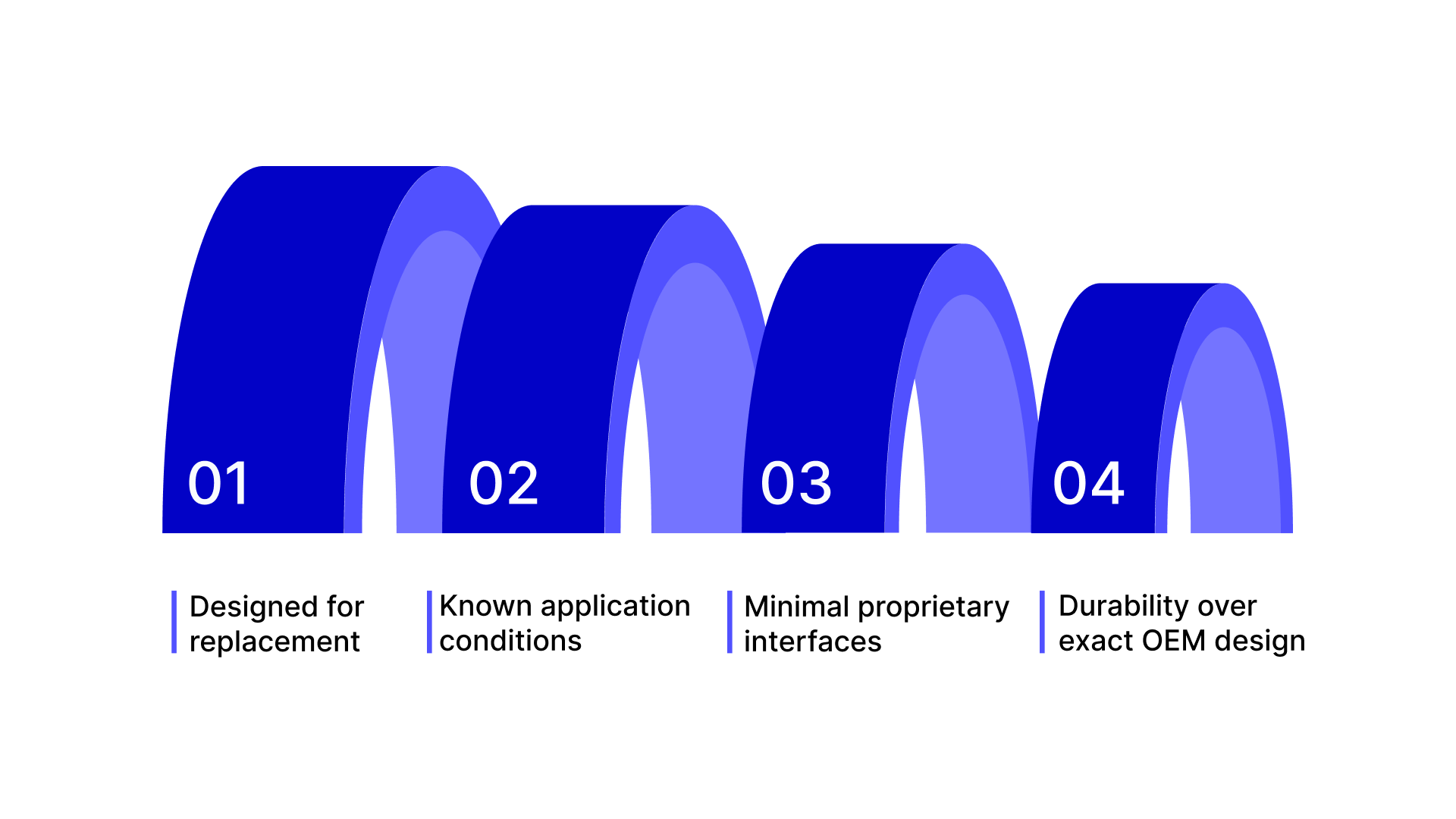
Non-OEM replacement parts may be appropriate when:
The part is designed specifically for replacement use, not original assembly
The application and operating conditions are clearly understood
The part does not interface tightly with proprietary or tightly controlled systems
Performance depends more on durability and consistency than on exact original design lineage
In these cases, the replacement part is evaluated on functional suitability, not origin.
Why replacement intent matters
OEM parts are often optimized for original equipment builds. Replacement parts, whether OEM or non-OEM, may be designed differently to account for:
Real-world operating conditions
Wear patterns seen after initial service life
Common failure points observed in the field
For you, the relevant question is not who made the original part, but whether the replacement part is designed to perform reliably in its replacement role. And this opens up options. When OEM is not required, the focus should shift to whether the replacement part is designed for how your equipment is actually used today.
What “Compatible OEM” Actually Means (And What It Does Not)?
The term compatible OEM is widely used, but it is often misunderstood. Clarifying this term helps avoid incorrect assumptions during procurement and maintenance decisions.
What “compatible OEM” usually means.
In most cases, compatible OEM indicates that:
The part is designed to fit and function in place of an OEM part
Interfaces and mounting points align with the original design
The part is intended for the same application
Compatibility focuses on fit and function, not on manufacturing origin.
What “compatible OEM” does not mean
It does not automatically mean:
The part is made by the original equipment manufacturer
The part is identical in design intent to the OEM component
The part is suitable for all operating conditions
Compatibility should be treated as a starting point, not a final qualification.
The Real Risk Is Not OEM vs Aftermarket — It Is Mismatch
The most common cause of replacement part failure is not whether a part is OEM or non-OEM. It is a mismatch between the part and the operating conditions.
What a mismatch looks like in practice
Mismatch often occurs when:
A part fits physically, but is not designed for the duty cycle
The operating environment differs from the original assumptions
Replacement decisions rely on labels instead of application context
In these cases, even OEM parts can underperform.
Why mismatch lead to repeat issues
When a replacement part is poorly matched:
Failures tend to repeat rather than resolve
Maintenance effort increases without improving uptime
The same decision gets revisited under pressure
For you, this creates unnecessary risk and noise in maintenance planning.
Reframing the decision
Instead of asking whether a part is OEM or aftermarket, the more reliable question is:
Is this part designed for how this equipment is actually used today?
That shift in perspective helps reduce repeat failures and supports more predictable outcomes.
How to Evaluate Replacement Parts Without Relying on Labels?
When OEM is not mandatory, the most reliable approach is to evaluate replacement parts based on use-case fit, not branding. This helps you reduce risk without defaulting to assumptions.
A practical evaluation framework you can use
When reviewing any replacement part, consider the following:
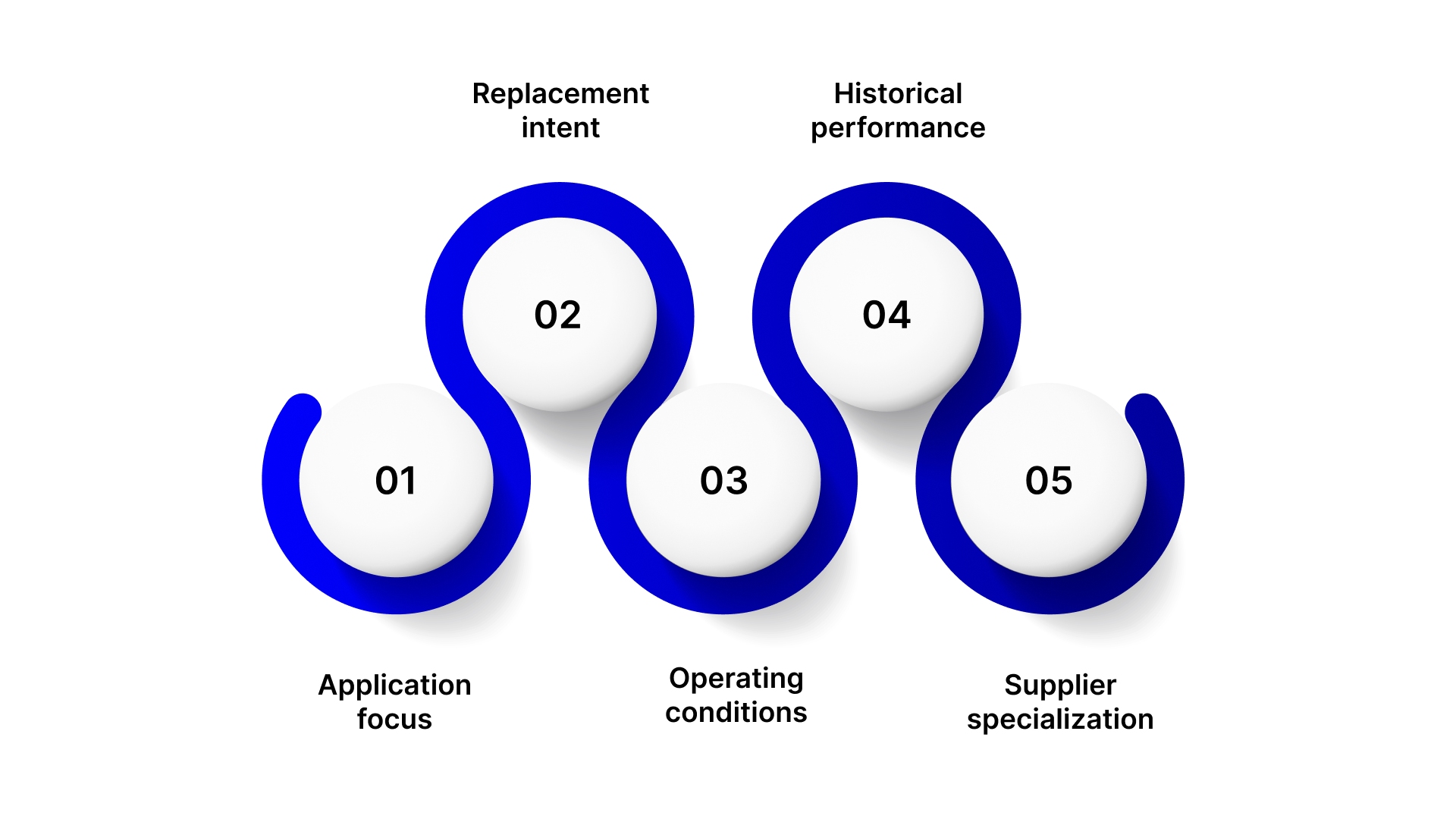
Application focus: Is the part designed specifically for the type of equipment and duty cycle you operate?
Replacement intent: Was the part developed with replacement performance in mind, or only original assembly?
Operating conditions: Does the part align with stop-start use, idle time, and outdoor exposure?
Historical performance: Has the supplier demonstrated consistent results in similar equipment or environments?
Supplier specialization: Does the supplier focus on your equipment category, or are they serving broad, unrelated markets?
This framework keeps the decision grounded in operational reality rather than labels.
Why this approach reduces risk
Evaluating parts this way:
Shifts decisions from brand-based to evidence-based
Reduces repeat failures caused by a mismatch
Makes decisions easier to justify internally
For you, this creates consistency across procurement and maintenance planning.
What does this mean for Ground Support Equipment Vehicles?
Ground support equipment vehicles operate under conditions that amplify the impact of replacement decisions. Short duty cycles, frequent shutdowns, and outdoor exposure place repeated stress on components.
Why replacement decisions matter more in GSE vehicles
In ground support equipment fleets:
Downtime affects immediate operations
Repeat failures compound quickly
Replacement decisions are often made under time pressure
This makes suitability more important than origin alone.
Applying the evaluation mindset to GSE vehicles
When evaluating replacement parts for GSE vehicles, the focus should be on:
Alignment with real operating patterns
Predictable performance between maintenance intervals
Supplier understanding of airport ground equipment use
Manufacturers such as FSR Products specialize in producing radiators exclusively for airport ground support equipment vehicles, with designs aligned to these operating conditions rather than generic applications.
For you, this perspective supports more confident replacement decisions and helps balance uptime, risk, and accountability.
Common Misconceptions That Distort OEM vs Replacement Decisions
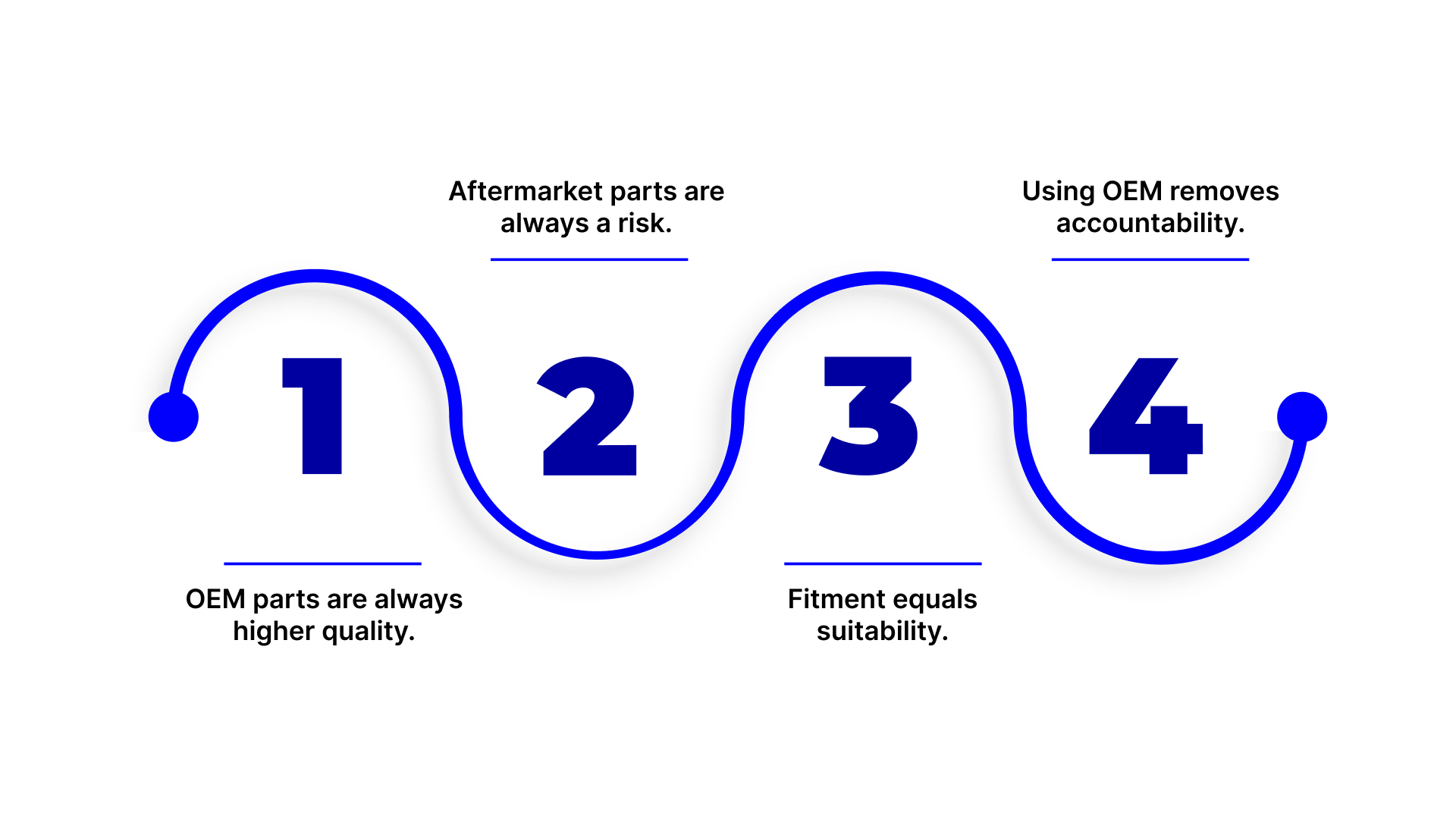
Replacement part decisions are often influenced by assumptions rather than evidence. Clearing up these misconceptions helps you evaluate options more confidently.
“OEM parts are always higher quality.”
OEM parts follow original design intent, but that does not guarantee they are the best fit for every replacement scenario. Changes in usage patterns or operating conditions can affect outcomes regardless of origin.
“Aftermarket parts are always a risk.”
Non-OEM parts vary widely. Risk depends on application alignment and design intent, not the aftermarket label itself.
“Fitment equals suitability.”
A part that fits physically may still be poorly matched to duty cycles, environment, or replacement use. Fitment is only a starting point.
“Using OEM removes accountability.”
OEM parts can simplify justification, but they do not eliminate responsibility for outcomes. Performance issues can still occur if suitability is overlooked.
Understanding these points helps shift decisions away from assumptions and toward practical evaluation.
Conclusion
The question are replacement parts are as good as OEM parts does not have a universal answer. The right choice depends on how the part will be used, the constraints you operate under, and the risk you are managing.
For you, the most reliable approach is to evaluate replacement parts based on suitability, not labels. OEM parts are the right choice in some situations, particularly where policy, warranty, or integration demands it.
In others, non-OEM replacement parts can perform equally well when they are designed for the application and operating conditions.
In ground support equipment vehicles, where downtime has an immediate operational impact, this evaluation mindset is especially important.
Manufacturers such as FSR Products focus on producing radiators exclusively for airport ground support equipment vehicles, with designs aligned to real-world GSE operating conditions.
If you would like to discuss replacement part considerations for your GSE fleet, you can contact us to continue the conversation.
FAQs
1. Are replacement parts always lower quality than OEM parts?
No. Quality depends on how the replacement part is designed and whether it matches the operating conditions. Origin alone does not determine performance.
2. What does “compatible OEM” mean when buying replacement parts?
Compatible OEM usually means the part is designed to fit and function in place of an OEM part. It does not mean the part is made by the OEM or designed with the same priorities.
3. When is it necessary to use OEM replacement parts only?
OEM replacement parts are often required when equipment is under warranty, when contracts specify OEM-only purchases, or when components are tightly integrated with OEM-controlled systems.
4. Can non-OEM replacement parts increase downtime risk?
They can if they are poorly matched to the application. Downtime risk comes from a mismatch, not from whether a part is OEM or non-OEM.
5. How should replacement parts be evaluated for ground support equipment vehicles?
They should be evaluated based on application focus, duty cycle alignment, operating conditions, and supplier specialization rather than labels alone.