When a radiator fails, the immediate question is often simple: Can another radiator work in its place?
On paper, interchangeability sounds like a quick fix. In practice, especially in airport ground support equipment, it is rarely that straightforward.
Radiators may look similar, but small differences in fit, layout, and integration can quickly turn a replacement decision into delays, reorders, and unexpected downtime. For managers responsible for keeping equipment available on the ramp, those delays matter.
This guide breaks down when radiators can be interchangeable, when they cannot, and how to evaluate compatibility before you approve a replacement.
Key Takeaways
Interchangeable is not the same as “close enough.” In GSE, compatibility depends on fit, integration, and application, not appearance.
Most problems show up late. Interchangeability issues are usually discovered during installation, not ordering.
Verification beats speed. A few checks upfront save far more time than a rushed replacement decision.
Specialization reduces risk. Working with GSE-focused radiator suppliers like FSR Products helps avoid assumptions, reorders, and downtime.
What “Interchangeable” Really Means for GSE Radiators?
In ground support operations, “interchangeable” does not simply mean that a radiator fits into the same space.
A radiator is interchangeable only if it works as intended within the equipment, without forcing adjustments, workarounds, or compromises. That distinction is where most assumptions break down.
In practice, interchangeability usually depends on three questions:
Does it physically fit the equipment without modification?
Does it connect correctly to existing hoses, mounts, and airflow paths?
Does it support the way the equipment actually operates on the ramp?
If the answer to any of these is unclear, the radiator may be similar, but not interchangeable.
This is why visual similarity or approximate size alone is not enough. Ground support equipment operates in confined layouts, often with limited flexibility for changes. A replacement that looks acceptable at first can create installation issues or performance concerns once installed.
Understanding interchangeability as application compatibility, not part similarity, helps you avoid those problems early.
Key Compatibility Considerations for GSE Radiators
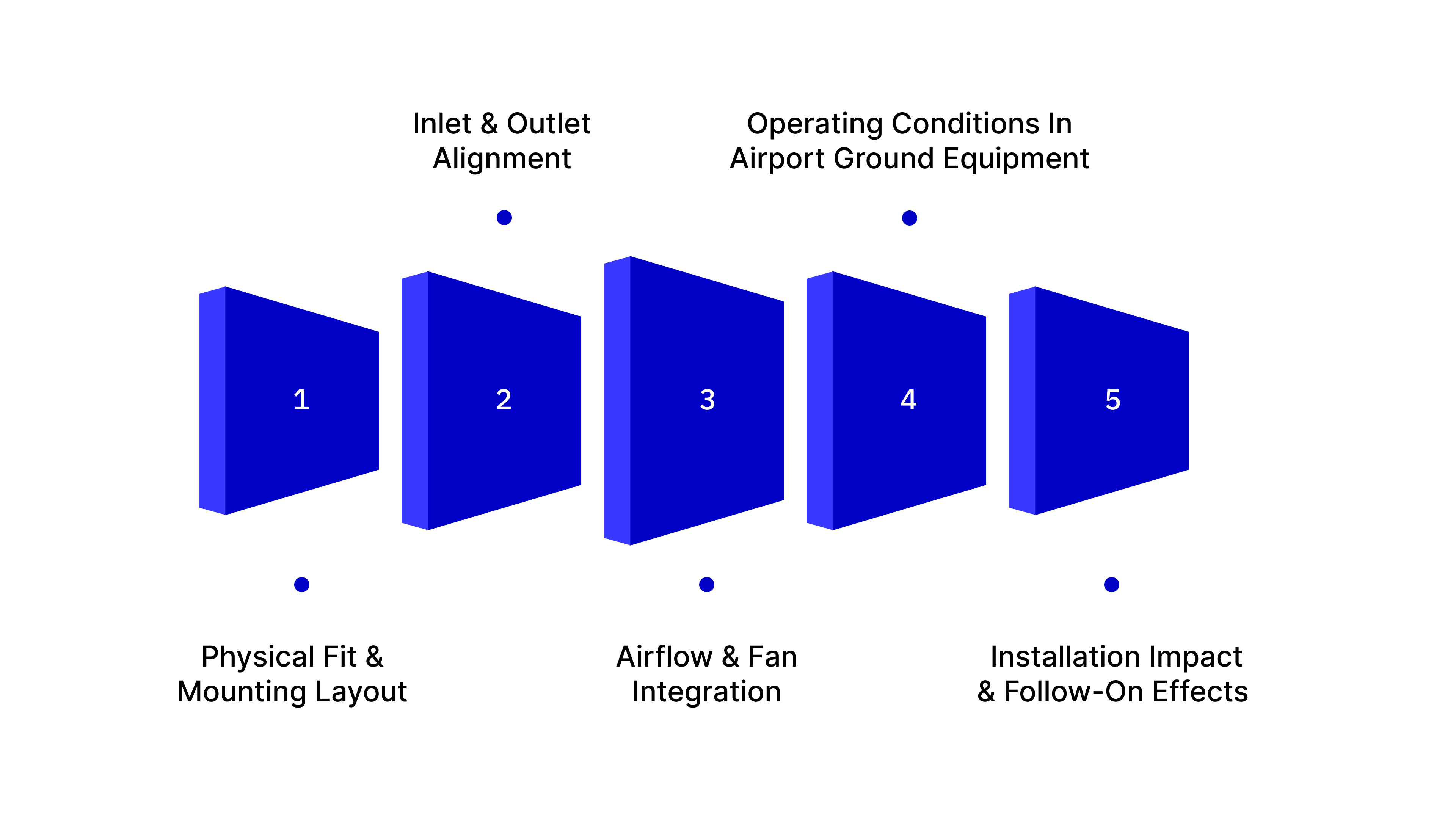
When you evaluate whether a radiator can be used as a replacement, compatibility issues usually fall into a few predictable areas.
These are the points that most often delay installations or trigger reorders in airport ground support operations.
1. Physical fit and mounting layout
Even small differences in mounting layout can create installation problems.
Things to verify early:
How the radiator is positioned within the equipment
Whether existing mounting points align without adjustment
Available clearance around surrounding components
In ground support equipment, space is limited. If the radiator does not mount cleanly, installation time increases, and equipment stays out of service longer.
2. Inlet and outlet alignment
Connection points are a common source of mismatch.
Check for:
Alignment with existing hose routing
Compatibility with current connection layouts
Clearance for hoses once installed
If connections do not line up, hoses may need to be rerouted or adjusted. That adds work and increases the chance of delays during installation.
3. Airflow and fan integration
Radiators do not operate in isolation.
Consider:
How does airflow move through the radiator in the equipment
Fan placement and shroud compatibility
Whether airflow paths remain unobstructed after installation
A radiator that disrupts airflow may appear acceptable initially, but create operational issues over time.
4. Operating conditions in airport ground equipment
Ground support equipment operates under specific conditions:
Frequent stop-start use
Long idle periods
Continuous operation during peak airport activity
A replacement radiator should be suited to these patterns, not just a similar-looking application.
5. Installation impact and follow-on effects
Compatibility also affects the maintenance process itself.
Ask:
Will this installation require additional adjustments?
Will it delay the return of equipment to service?
Will it create follow-up work after installation?
If the answer is yes, the radiator may not be truly interchangeable.
Most interchangeability problems are not discovered during ordering. They surface during installation. Structured evaluation before purchase helps you avoid that risk.
Scenarios Where Radiators Might Be Interchangeable?
Radiators are not universally interchangeable. However, there are controlled situations where a replacement can work without creating installation or operational issues.
When interchangeability is most likely
Interchangeability is most likely when the replacement radiator is intended for the same equipment application, not just a similar-looking unit.
This typically applies when:
The equipment model and configuration remain unchanged
The replacement is listed as a direct-fit equivalent
There is a verified OEM cross-reference for that specific application
In these cases, the radiator is designed to align with existing mounts, connections, and airflow paths.
Why verification still matters
Even within the same equipment family, variations can exist across production runs or configurations. A replacement that works in one unit may not align perfectly in another.
Before approving an interchangeable option, it is important to confirm that the radiator supports the same installation layout and operating context.
When this alignment is confirmed upfront, interchangeability becomes a managed decision rather than a gamble.
When Radiators Are Not Interchangeable, and Why It Matters?
In many ground support applications, radiators that appear similar are not interchangeable once installation begins.
Where interchangeability breaks down
Interchangeability commonly fails when:
The radiator was designed for a different equipment layout
Hose connections do not align with existing routing
Fan or airflow integration differs
The radiator was intended for a different operating environment
These issues are rarely obvious during ordering. They usually surface after the equipment is already offline.
The operational impact of a wrong assumption
When interchangeability fails, the consequences are operational rather than theoretical:
Installations take longer than planned
Additional parts or adjustments are required
Equipment remains out of service while a correct replacement is sourced
For airport ground operations, these delays affect scheduling, maintenance planning, and equipment availability. This is why interchangeability should be treated as a risk decision, not a shortcut.
A Practical Compatibility Checklist Before Ordering a Replacement
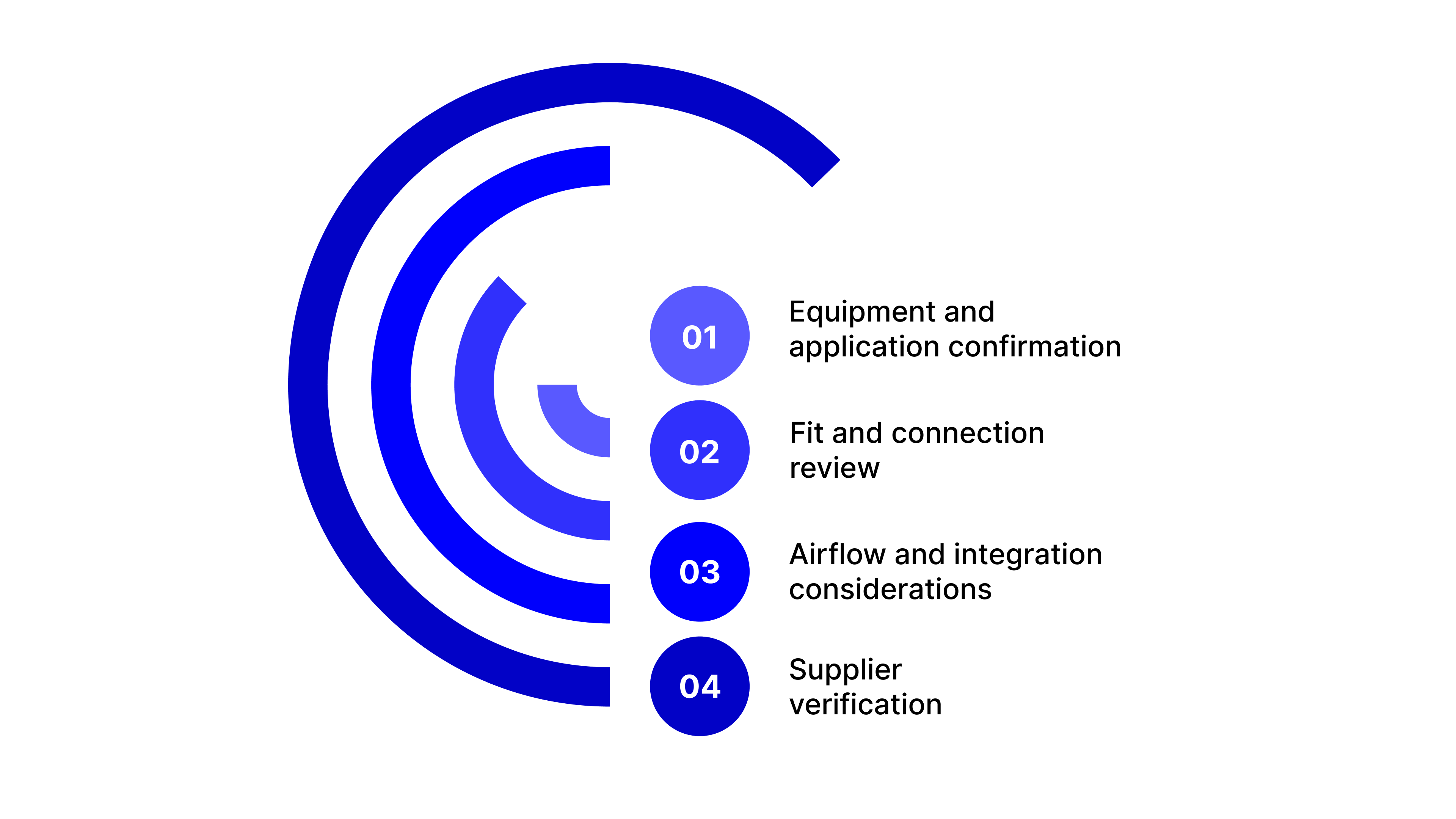
Before you approve a radiator replacement for ground support equipment, it helps to slow the process down just enough to verify compatibility. A short check upfront often prevents longer delays later.
1. Equipment and application confirmation
Start with the basics. Confirm that the replacement is intended for the same equipment type and application.
Verify the exact equipment model and configuration
Confirm how the equipment is used in daily airport operations
Check whether the radiator is listed for that specific application
2. Fit and connection review
Next, review how the radiator integrates with existing components.
Mounting orientation and attachment points
Inlet and outlet alignment with the current hose routing
Clearance around surrounding components once installed
If any of these areas require adjustments, interchangeability becomes less reliable.
3. Airflow and integration considerations
Radiators rely on proper airflow to function as intended.
Confirm compatibility with existing fans and shrouds
Ensure airflow paths are not restricted after installation
4. Supplier verification
Finally, confirm details with the supplier.
Ask whether the radiator is a direct replacement or an alternative
Verify any application notes or limitations
Confirm it is intended for airport ground support equipment use
Completing this checklist helps you make compatibility decisions with fewer assumptions and less risk.
OEM vs Aftermarket Radiators: How Compatibility Is Usually Evaluated
When sourcing a replacement radiator, compatibility decisions often involve choosing between an OEM-listed option and an aftermarket alternative.
How OEM compatibility is typically approached
OEM catalogues are usually built around specific equipment models and configurations. When available, they provide a clear reference point and reduce uncertainty during ordering. This approach is often preferred when consistency and documentation are priorities.
Where aftermarket options come into play
Aftermarket radiators can also be suitable when they are designed as direct-fit replacements for the same application.
Common Compatibility Mistakes Equipment Managers Make
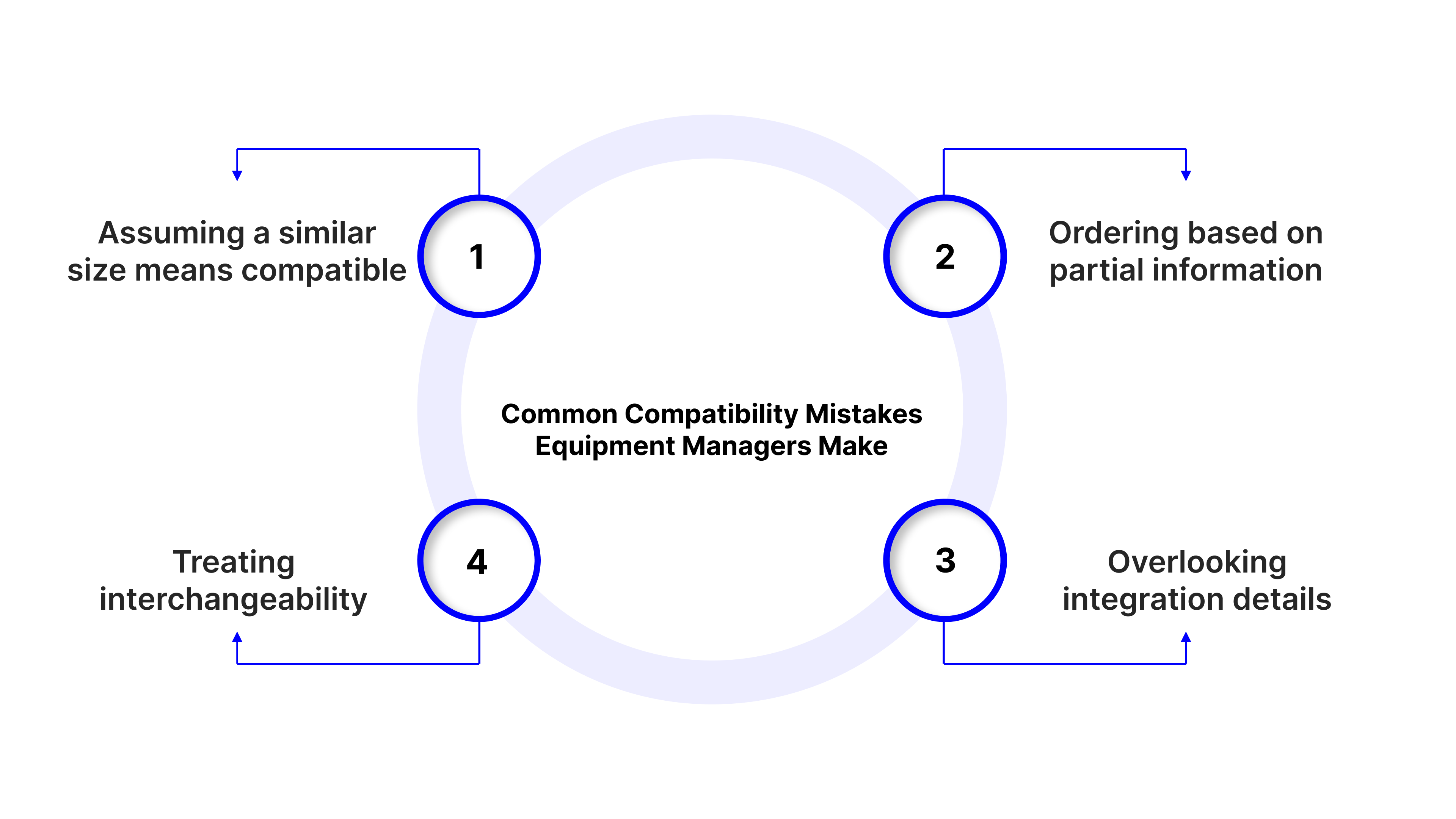
Radiator compatibility issues often trace back to a few common assumptions made during the replacement process. These mistakes are understandable, but they can create avoidable delays.
1. Assuming a similar size means compatible
A radiator that appears close in size may still differ in mounting layout or connection alignment. Relying on visual similarity alone is one of the most frequent causes of mismatch.
2. Ordering based on partial information
Using an incomplete model reference or relying on past orders can lead to selecting a radiator intended for a different configuration. Small differences between equipment builds can matter more than expected.
3. Overlooking integration details
Fans, shrouds, and surrounding components are often designed around a specific radiator. When these details are overlooked, installation problems tend to surface late in the process.
4. Treating interchangeability as a shortcut
Interchangeability is sometimes used to speed up sourcing. In practice, this approach often extends downtime when compatibility issues arise during installation.
Why Specialized GSE Radiator Suppliers Matter
Radiator compatibility decisions become easier when the supplier understands airport ground support equipment as a category, not just radiators as parts.
1. Application-focused knowledge
Specialized GSE radiator suppliers work with specific equipment types and configurations. This familiarity helps reduce assumptions during the ordering process and supports more accurate replacements.
2. Fewer clarification cycles
When a supplier understands how ground support equipment is built and used, fewer follow-up questions and revisions are needed. That shortens the time between ordering and installation.
3. Reducing compatibility risk
Working with a supplier focused on GSE radiators helps limit the trial-and-error that often comes with general parts sourcing.
This is where companies like FSR Products can support compatibility checks and replacement decisions for airport ground support equipment radiators, without pushing unnecessary changes.
The key is whether the supplier has application-level knowledge of the equipment, not just a general parts listing.
What matters most in the decision
The choice is less about OEM versus aftermarket and more about confidence in fit and integration.
A compatible radiator installs cleanly, aligns with existing systems, and supports how the equipment operates on the ramp. When that confidence is missing, compatibility risk increases regardless of source.
Conclusion
Radiator interchangeability is rarely a simple yes-or-no decision in airport ground support equipment. What matters is not whether a radiator looks similar, but whether it fits, integrates, and supports the way your equipment operates on the ramp.
By evaluating compatibility upfront and avoiding assumptions, you reduce the risk of delays, reorders, and extended downtime.
If you want help confirming whether a radiator is truly interchangeable for your equipment, contacting a specialist can save time and uncertainty.
You can reach out to FSR Products to discuss radiator compatibility or replacement options specifically for airport ground support equipment.
FAQs
1. Are radiators interchangeable across different ground support equipment models?
In most cases, no. Even when equipment looks similar, differences in layout, connections, and integration can prevent direct interchangeability. Compatibility should always be verified by application, not appearance.
2. What information should I have before ordering a replacement radiator?
At a minimum, you should confirm the equipment model, configuration, and how the equipment is used in daily operations. This helps ensure the replacement is intended for that specific application.
3. Can a similar radiator be used as a temporary solution?
Temporary substitutions can introduce installation issues or performance risks. For airport ground support equipment, even short-term mismatches can extend downtime if the radiator does not integrate properly.
4. How can I reduce the risk of ordering the wrong radiator?
Work with suppliers who understand GSE applications and can confirm fitment before you place the order.