When choosing a replacement radiator, one of the first questions that comes up is simple: what material is best? Aluminum, copper, and brass have all been used for decades, each with its own strengths and trade-offs.
But when the equipment in question is operating on an airport ramp, under heat, vibration, and tight turnaround pressures, that decision becomes much more than a materials debate.
The radiator’s construction material directly affects equipment uptime, corrosion resistance, and long-term maintenance costs. For airport ground support equipment, choosing correctly means fewer breakdowns and better reliability in demanding operating environments.
This guide compares the most common radiator materials, aluminum, copper, brass, and composite designs, explaining how each performs in GSE use. It’s written to help you make a confident, fact-based choice for your fleet.
Quick Comparison Summary: Radiator Materials at a Glance
Material | Key Strengths | Limitations | Best Suited For |
Aluminum | Corrosion-resistant, lightweight, durable under vibration, and reliable for long-term use | Less repairable (usually replaced) | Modern GSE fleets require uptime and low maintenance |
Copper | Excellent heat transfer, easily repaired | Heavy, corrodes quickly, higher maintenance | Older or low-use equipment with accessible maintenance windows |
Brass | Durable, solderable, long service life | Heavy, less efficient, costly | Legacy fleets where weight is less critical |
Plastic/Aluminum Hybrid | Affordable, very light | Limited strength, poor vibration durability | Light-duty or short-service equipment |
Stainless Steel | Exceptional corrosion and fatigue resistance | Very heavy, expensive | Specialized or chemical-exposed environments |
Why Radiator Material Matters in Airport Ground Support Equipment
Airport ground support equipment operates in one of the harshest mechanical environments imaginable. Extended idling, frequent start-stop cycles, dust, humidity, and fuel residue all affect cooling systems differently than in on-road or racing vehicles.
Here, material choice determines more than temperature control; it defines reliability, maintenance cost, and operational uptime.
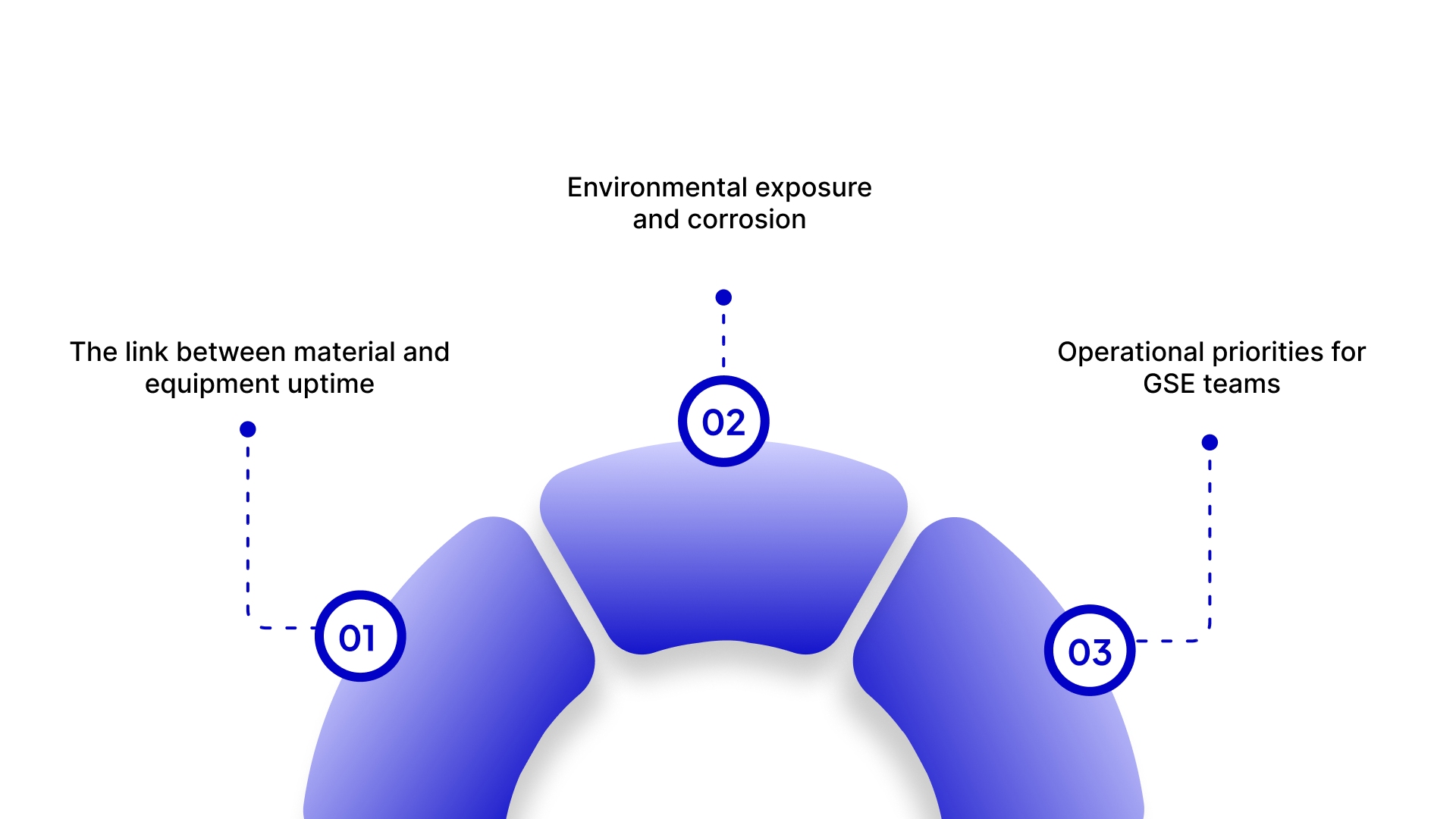
1. The link between material and equipment uptime
Radiator failures aren’t just part issues; they’re schedule disruptions. The wrong material can accelerate corrosion or vibration fatigue, shortening component life and forcing unplanned maintenance.
2. Environmental exposure and corrosion
Copper and brass radiators perform well thermally but react faster to moisture and chemical exposure, leading to corrosion over time.
Aluminum offers a lighter, corrosion-resistant alternative that holds up better under GSE conditions.
3. Operational priorities for GSE teams
For procurement and maintenance managers, the best radiator material balances:
Cooling performance
Corrosion resistance
Weight and handling
Lifecycle maintenance effort
Replacement availability
Choosing the right material ensures each unit stays operational longer, with fewer interruptions and reduced total cost of ownership.
Common Radiator Materials Explained
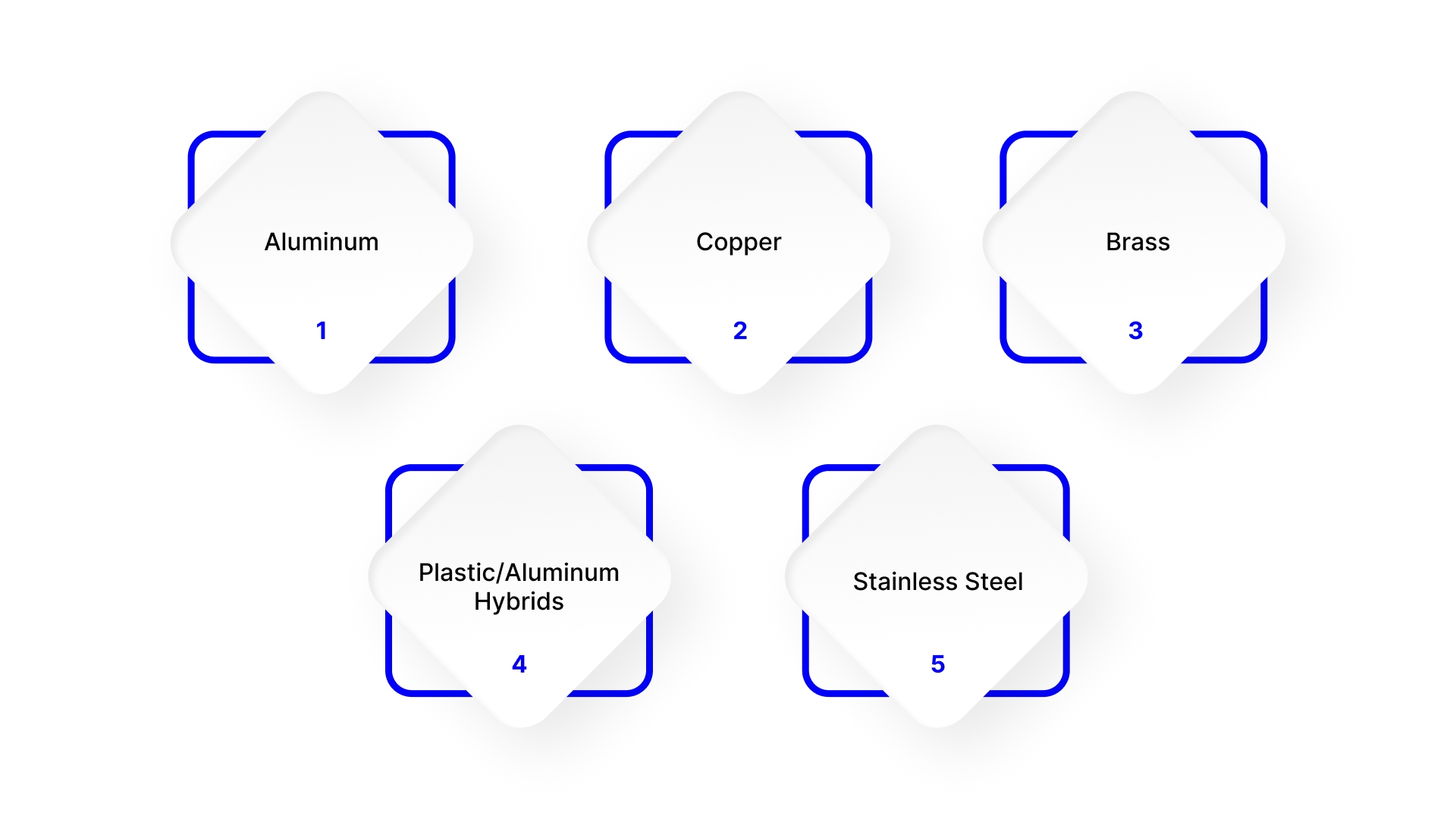
Radiators are manufactured from a variety of materials, each with distinct strengths, limitations, and maintenance profiles.
Understanding these differences helps you make informed sourcing decisions and predict long-term performance in demanding airport environments.
1. Aluminum
Aluminum has become the industry standard for modern radiator construction, especially in GSE and industrial vehicles.
Advantages:
Lightweight: Reduces total equipment weight and stress on mounts.
Excellent corrosion resistance: Naturally forms a protective oxide layer that resists rust, even in humid or saline environments.
Strong vibration tolerance: Flexes rather than cracking under continuous use.
Lower maintenance: Requires less cleaning and fewer replacements compared to copper or brass.
Disadvantages:
Less repairable: Cracks and leaks often require full replacement rather than patch repair.
Requires proper coolant maintenance: Neglect can accelerate internal corrosion.
GSE Relevance: For continuous-use airport vehicles, aluminum strikes the best balance of efficiency, durability, and maintenance predictability. It’s the preferred choice for fleets prioritizing uptime over field repairability.
2. Copper
Copper radiators were once dominant due to their exceptional heat conductivity, but are now used less frequently in high-demand applications.
Advantages:
Superior thermal transfer: Moves heat rapidly, beneficial in compact spaces.
Highly repairable: Easy to solder or patch leaks during service.
Widely available: Familiar to most technicians and legacy systems.
Disadvantages:
Heavy: Adds unnecessary load to GSE vehicles, stressing mounts and reducing fuel efficiency.
Corrosion-prone: Reacts quickly with moisture, de-icing chemicals, and oxidizing agents common in airport settings.
Fatigue sensitivity: May develop cracks at solder joints under vibration.
GSE Relevance: Copper is best suited to legacy or low-duty-cycle equipment where occasional repairs are acceptable. For modern operations, its corrosion and fatigue drawbacks outweigh its thermal advantages.
3. Brass
Brass radiators offer a mix of strength and repairability but are gradually being replaced by lighter, more efficient materials.
Advantages:
Strong and durable: Handles pressure well and resists cracking.
Easy to repair: Can be soldered repeatedly without major structural issues.
Long service potential: Good option for vintage or heavy static-use machines.
Disadvantages:
Heavy: Adds significant weight to assemblies.
Moderate corrosion resistance: Performs better than copper but is still vulnerable in humid or chemical environments.
Less efficient at heat transfer: Requires a larger surface area for the same cooling effect.
GSE Relevance: Brass can work well in older fleets still using legacy designs, but it’s gradually being phased out in favor of aluminum’s lighter, more corrosion-resistant construction.
4. Plastic/Aluminum Hybrids
These radiators use an aluminum core with plastic tanks and fittings — common in light-duty or cost-sensitive applications.
Advantages:
Affordable: Lowest initial cost among all materials.
Lightweight: Easy to handle and install.
Good thermal balance: Aluminum core provides moderate heat performance.
Disadvantages:
Weak structural integrity: Plastic tanks degrade over time from heat and vibration.
Difficult to repair: Cracks and leaks often mean full replacement.
Limited service life: Shorter lifespan under high-load or continuous-duty use.
GSE Relevance: Suitable for auxiliary or non-critical airport vehicles with limited operating hours. Not recommended for tugs, loaders, or tractors that experience daily stress cycles.
5. Stainless Steel
Stainless steel is used in niche cooling systems where corrosion control outweighs cost concerns.
Advantages:
Superior corrosion resistance: Performs exceptionally in saline or chemical-heavy settings.
High structural strength: Resistant to deformation, cracking, or fatigue.
Disadvantages:
Very heavy: Increases equipment weight substantially.
Expensive: High manufacturing and replacement costs.
Less efficient heat transfer: Thermal conductivity is lower than that of aluminum or copper.
GSE Relevance: Used in special-purpose equipment operating in extreme environments, for example, coastal airports or maintenance units exposed to chemicals. Overbuilt for general GSE use.
Each material brings clear trade-offs. Aluminum remains the best balance of corrosion resistance, strength, and lifecycle cost, while copper and brass maintain relevance mainly in legacy fleets. For high-duty, outdoor airport operations, aluminum consistently delivers the most dependable long-term performance.
Performance Comparison: Aluminum vs Copper vs Others
Radiator materials differ not only in heat performance but also in weight, durability, and maintenance requirements.
The table below summarizes how the most common materials perform across key operational factors relevant to airport ground support equipment.
Property | Aluminum | Copper | Brass | Plastic/Aluminum | Stainless Steel |
Heat Transfer | Good | Excellent | Moderate | Fair | Moderate |
Weight | Light | Heavy | Heavy | Very Light | Heavy |
Corrosion Resistance | High | Low | Moderate | Low | Very High |
Durability (Vibration) | Excellent | Fair | Good | Poor | Excellent |
Repairability | Moderate | High | High | Low | Moderate |
Cost | Moderate | High | High | Low | Very High |
Maintenance Needs | Low | High | Medium | High | Low |
Best Use Case | Airport GSE, heavy-duty | Specialty or legacy | Older fleets | Light-duty, low-cycle | Niche, corrosive settings |
Aluminum offers the best mix of corrosion resistance, weight, and long-term performance, ideal for GSE equipment that operates daily and must stay available.
Copper remains thermally efficient but adds weight and corrosion risk, increasing maintenance time.
Brass is durable but less efficient, better suited to older or low-use equipment.
Plastic/aluminum hybrids cut costs upfront but reduce reliability in heavy-duty operations.
Stainless steel, while robust, is too costly and heavy for general airport use.
For most GSE fleets, aluminum provides the strongest performance-to-maintenance balance across real-world duty cycles.
Operational Factors That Influence Material Choice in GSE
Choosing a radiator material isn’t only about thermal performance; it’s about how that material holds up under actual working conditions.
Airport ground support equipment operates in environments that stress every component differently from on-road vehicles.
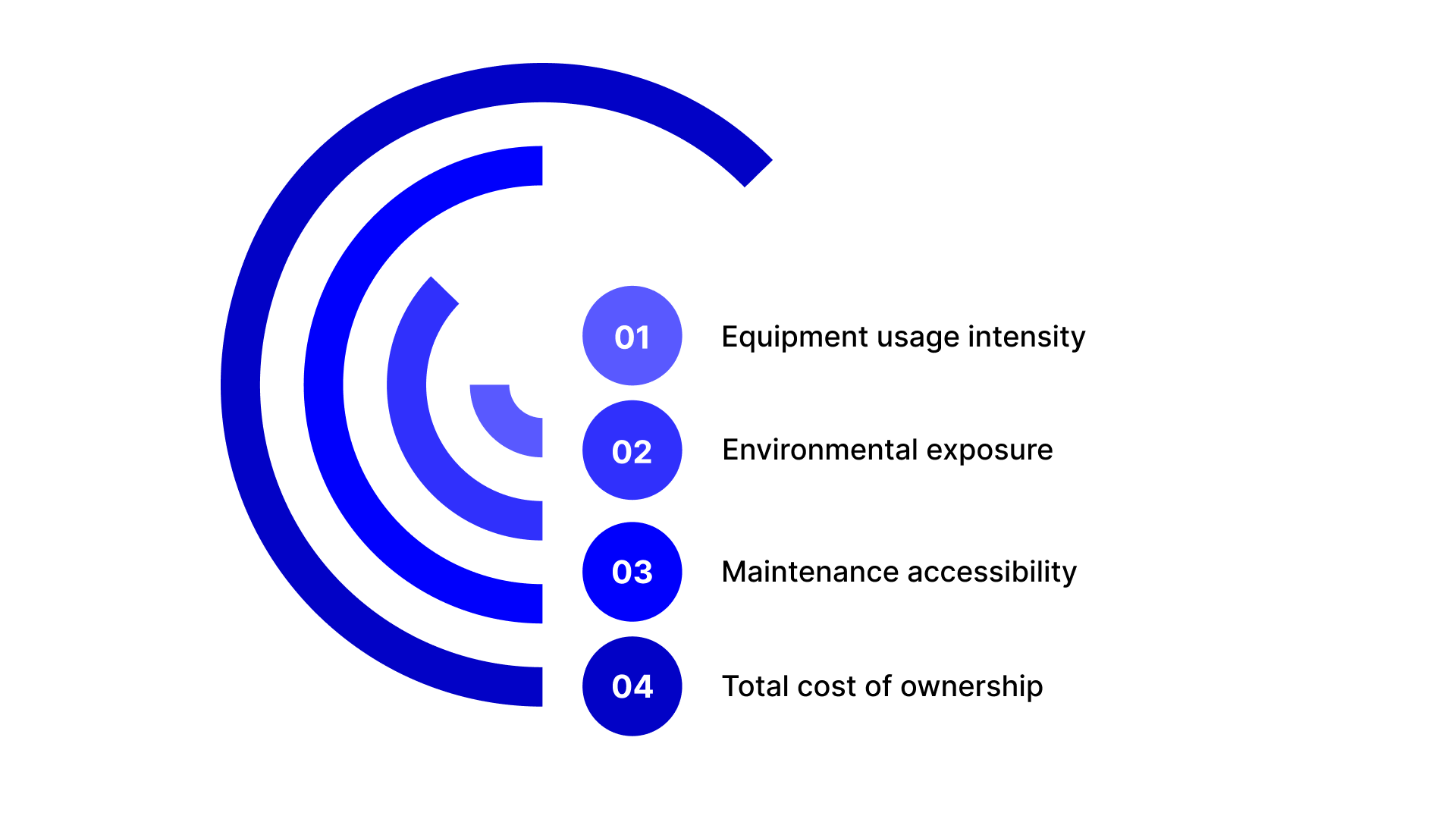
1. Equipment usage intensity
Continuous-use equipment (like tugs or cargo loaders) benefits from aluminum radiators that resist vibration and reduce structural fatigue.
Intermittent-use equipment can sometimes operate effectively with copper or brass, but maintenance intervals must be shorter.
2. Environmental exposure
Airport ramps expose equipment to humidity, de-icing fluids, dust, and jet exhaust, all of which accelerate corrosion.
Aluminum withstands these conditions better than copper or brass, particularly in long idle periods where moisture lingers.
3. Maintenance accessibility
Equipment that is hard to service benefits from radiators requiring fewer interventions.
Aluminum’s corrosion resistance and lower weight simplify handling and replacement.
4. Total cost of ownership
The true cost of a radiator isn’t just its purchase price.
Copper and brass often need more frequent cleaning or repair.
Aluminum offers better longevity and lower overall downtime cost.
Material choice should therefore reflect operational reliability over initial cost — especially when downtime impacts multiple service schedules.
Maintenance & Longevity Considerations
Even with proper cooling performance, material longevity determines real-world value. Understanding how different materials age helps plan replacements proactively.
1. Corrosion and fatigue resistance
Aluminum: Naturally forms a protective oxide layer, minimizing corrosion even with moisture exposure.
Copper: Corrodes more quickly in humid environments; leaks often begin at joints or solder points.
Brass: Resists corrosion moderately well but may weaken with repeated heat cycles.
2. Repairability vs. replaceability
Copper and brass radiators can often be soldered, extending life temporarily but requiring downtime.
Aluminum radiators are less repairable but typically operate longer before reaching failure. Their reliability and availability make replacement faster than extensive repair.
3. Maintenance cycle efficiency
For GSE managers, the right material minimizes intervention frequency.
Fewer unplanned repairs mean better uptime and predictable maintenance costs.
Lighter radiators also simplify removal and reinstallation, reducing labor effort.
4. Lifecycle takeaway
Over several maintenance cycles, the total cost advantage of aluminum becomes evident.
Lower corrosion rates and stable performance help sustain cooling efficiency longer, resulting in fewer service interruptions and more reliable ramp operations.
Choosing the Right Radiator Material for Your Fleet
Selecting the right radiator material for airport ground support equipment should align with how your fleet operates, how often it’s serviced, and the environments it works in. The decision comes down to balancing performance, reliability, and lifecycle cost.
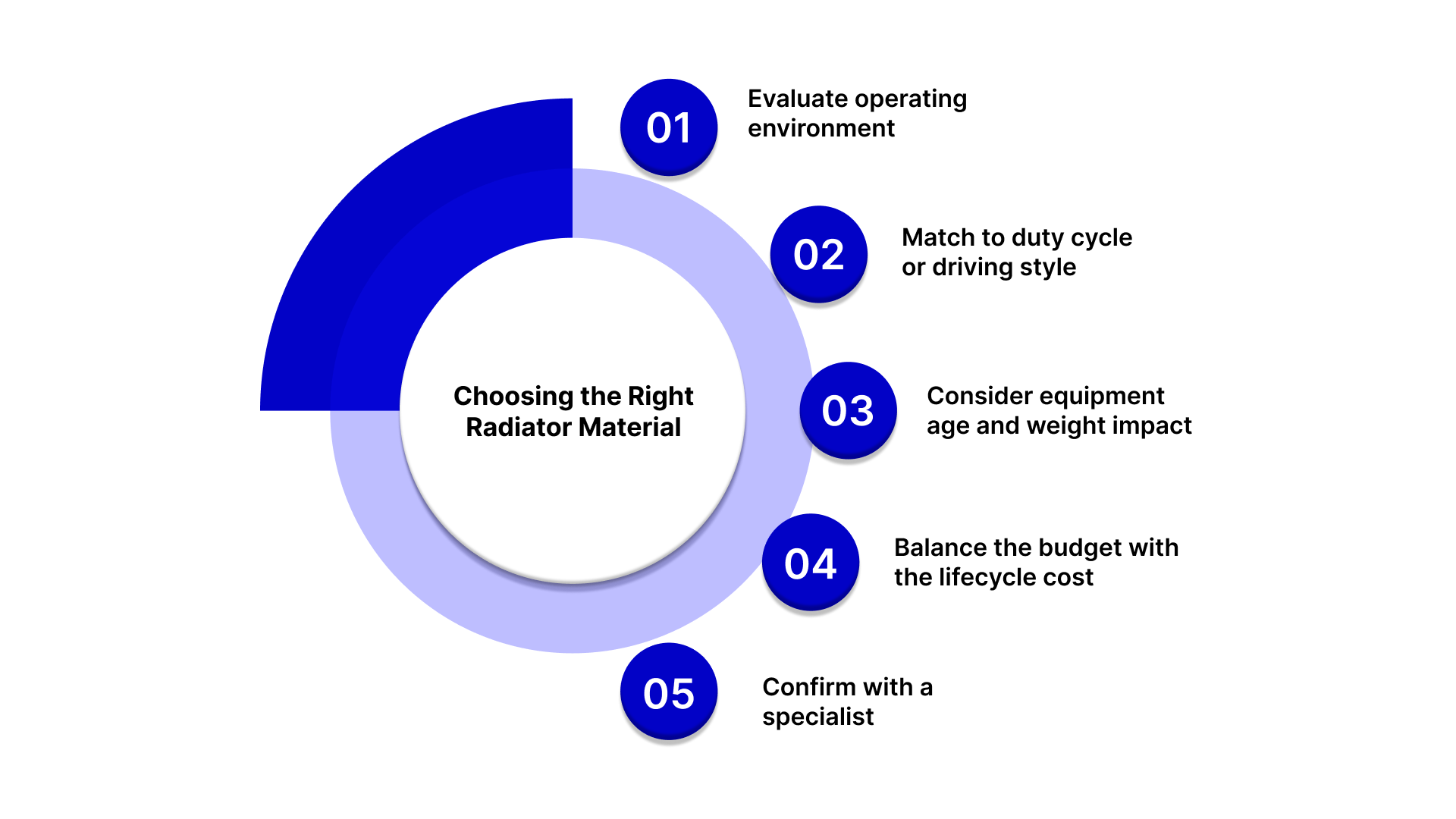
Step 1: Evaluate operating environment
High humidity or salt exposure: Choose corrosion-resistant materials such as aluminum or stainless steel.
Dry or moderate climates: Copper or brass may still perform well in legacy fleets with lighter use cycles.
Step 2: Match to duty cycle or driving style
Heavy-duty or continuous-use equipment: Aluminum performs best under constant vibration, heat, and load.
Light-duty or intermittent-use vehicles: Copper or brass may meet short-term needs but require closer maintenance tracking.
Step 3: Consider equipment age and weight impact
Older units: Retrofitting with aluminum can extend lifespan and simplify replacements.
Weight sensitivity: Aluminum reduces stress on mounts and brackets, improving handling and longevity.
Step 4: Balance the budget with the lifecycle cost
Upfront costs don’t tell the full story.
Copper and brass may cost less initially, but require more frequent repair and inspection.
Aluminum delivers lower downtime and predictable maintenance costs, improving total cost of ownership.
Step 5: Confirm with a specialist
Working with suppliers that understand GSE duty cycles ensures you’re not choosing based on theory alone.
FSR Products specializes in aluminum radiators engineered specifically for ground support equipment, offering verified fit and durability for airport conditions.
Conclusion
Selecting the right radiator material isn’t about finding the one with the highest thermal rating; it’s about choosing the one that keeps your equipment running longer, with less downtime and maintenance risk.
For airport ground support equipment, aluminum consistently provides the best balance of performance, corrosion resistance, and long-term operating value.
It handles vibration, humidity, and heavy-duty cycles better than older copper or brass options, making it the modern standard for reliability on the ramp.
If you’re evaluating radiator replacements or need guidance on material compatibility, you can contact FSR Products. Their team specializes in aluminum radiators engineered specifically for airport ground support equipment applications.
FAQs
1. What is the best material for airport ground support equipment radiators?
Aluminum is the most balanced option. It offers high corrosion resistance, low weight, and excellent vibration durability, ideal for the harsh operating conditions of airport ground equipment.
2. Why are copper radiators less common today?
Copper conducts heat well but corrodes faster and adds unnecessary weight. For continuous-use or outdoor operations, it requires more frequent maintenance than aluminum.
3. Are aluminum radiators repairable?
Yes, but most are replaced instead of repaired due to time efficiency. They typically last longer before failure, reducing overall maintenance interventions.
4. Is stainless steel ever a better choice?
Stainless steel radiators are highly durable but expensive and heavy. They’re only justified in highly corrosive or chemical-exposed environments, not general airport use.
5. How can I choose the right radiator material for my fleet?
Assess equipment usage, environmental exposure, and maintenance frequency. For most fleets, aluminum provides the best total lifecycle value, and FSR Products can confirm the right fit for your specific GSE models.