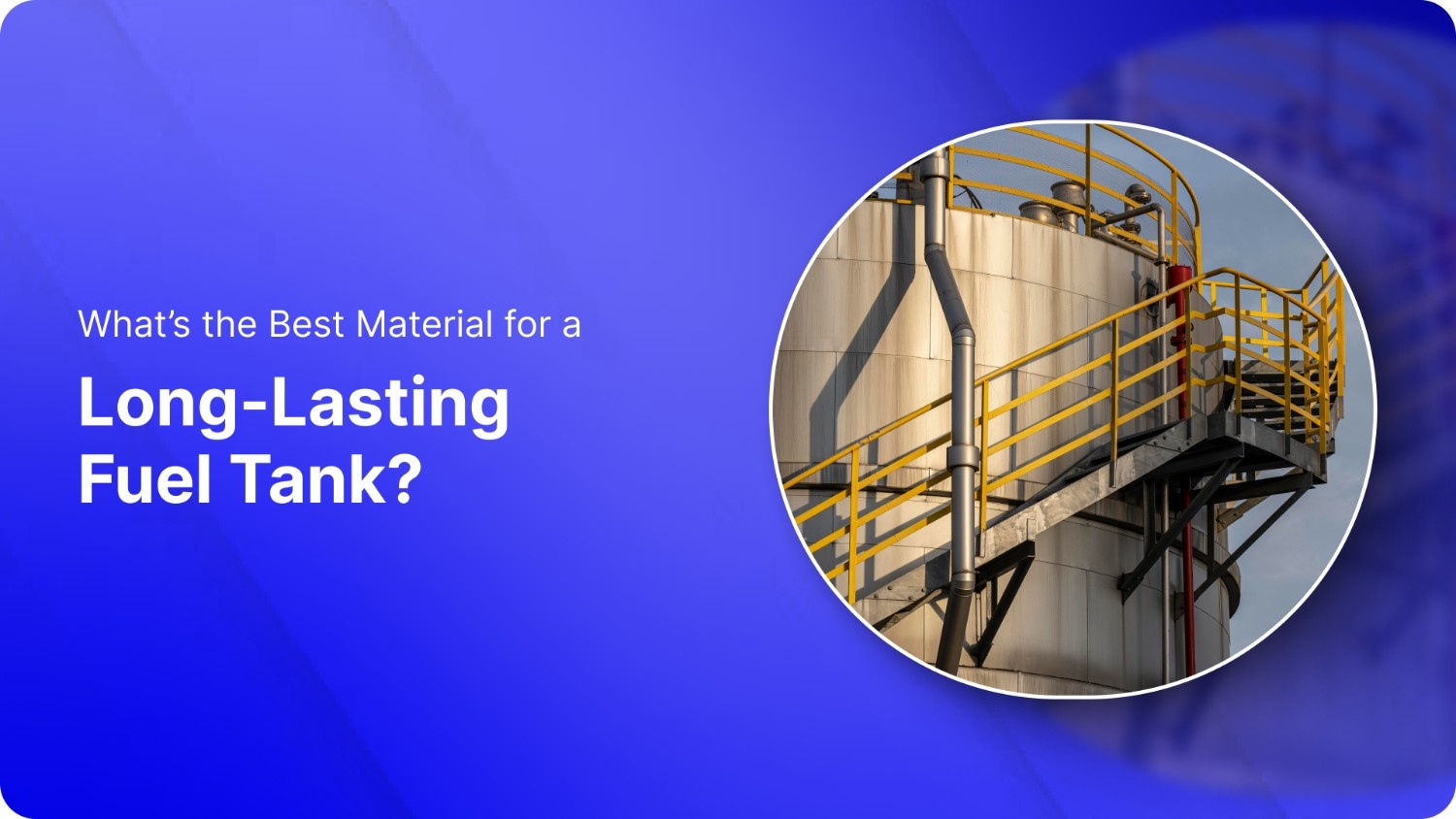
Selecting the best material for a fuel tank directly influences reliability, safety, and long-term performance. In airport ground support equipment (GSE), tanks face continuous vibration, chemical exposure, and temperature changes.
The material must protect against corrosion, prevent leaks, and handle heavy daily use without failure.
Understanding how steel, aluminum, HDPE, stainless steel, and fiberglass perform under these conditions helps maintenance teams and procurement managers choose confidently. Each option offers a different balance between weight, durability, and cost.
This guide explains how these materials compare, what to consider before specifying a replacement tank, and why selecting the right one extends fleet life.
Fuel Tank Materials Compared at a Glance
Each fuel tank material offers unique advantages and trade-offs. Understanding these helps maintenance and procurement teams align performance with operational goals.
Material | Weight | Corrosion Resistance | Durability | Maintenance Need | Best Use Case |
Steel | Heavy | Moderate | Very High | Medium | Stationary or rugged GSE |
Stainless Steel | Heavy | Very High | Very High | Low | Harsh fuels or long-life units |
Aluminum | Light | High | High | Low | Mobile GSE, high vibration |
HDPE (Single/Multilayer) | Light | Very High | Medium | Low | Light to medium-duty GSE |
Fiberglass (FRP) | Medium | Very High | High | Low | Stationary or semi-permanent setups |
Key Insight
Material defines reliability. Every fuel tank’s lifespan depends on how well its material withstands corrosion, vibration, and daily use.
Modern fleets prefer lighter, smarter designs. Aluminum and HDPE dominate because they balance weight, durability, and maintenance efficiency.
Match material to duty cycle. Steel works where toughness counts; HDPE and aluminum fit continuous-motion GSE tasks.
FSR Products builds replacement fuel and surge tanks that combine strength, corrosion resistance, and fitment precision, supporting long, reliable service for airport operations.
What Defines the “Best” Fuel Tank Material?
The best fuel tank material depends on its ability to perform under real operating conditions. Airport vehicles and equipment operate in tough environments where corrosion, fuel vibration, and constant load cycles challenge every component.
Key Qualities of a Reliable Fuel Tank Material
Corrosion Resistance: Prevents rust, leaks, and contamination from diesel or aviation fuels.
Strength and Impact Tolerance: Withstands vibration, shock, and structural stress during operation.
Weight Efficiency: Affects vehicle balance, fuel economy, and maneuverability.
Ease of Maintenance: Allows quicker inspection or replacement to reduce downtime.
Fuel Compatibility: Supports standard and blended fuels without degradation.
Regulatory Safety: Complies with containment and vapor emission standards.
For GSE fleets, the best choice balances corrosion resistance, structural durability, and maintenance simplicity. That balance improves reliability and reduces replacement frequency.
FSR Products engineers its replacement fuel tanks with these priorities in mind, ensuring safe and dependable performance across airport operations.
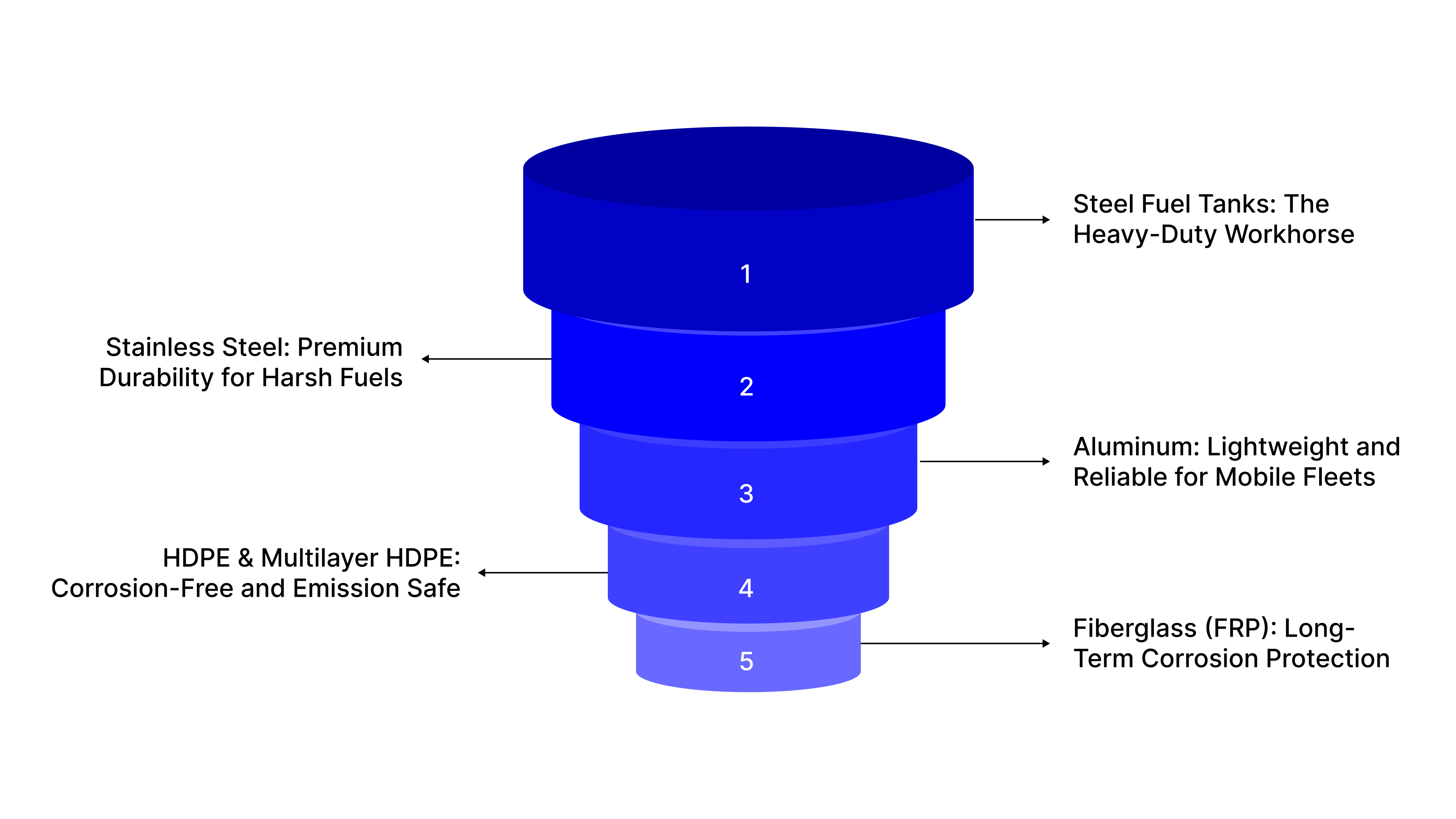
1. Steel Fuel Tanks: The Heavy-Duty Workhorse
Steel remains one of the most traditional and proven materials for fuel tanks. Its strength and durability make it suitable for demanding operations where external impacts or mounting stress are frequent.
Advantages
High Structural Integrity: Performs well under constant vibration and mechanical stress.
Impact Resistance: Ideal for heavy or fixed-position equipment.
Cost Efficiency: Readily available and cost-effective to manufacture.
Limitations
Corrosion Risk: Requires protective coatings or internal linings to prevent rust and fuel contamination.
Weight: Adds extra load to mobile vehicles, affecting handling and fuel efficiency.
Maintenance: Needs periodic inspection for surface wear or coating damage.
Best Applications
Stationary or limited-movement GSE, such as refueling stations or auxiliary generators.
Equipment where toughness and long service life outweigh the need for weight reduction.
Although heavier, steel tanks remain reliable when properly coated and maintained. Their resilience against impact and structural failure keeps them in use across legacy airport fleets.
2. Stainless Steel: Premium Durability for Harsh Fuels
Stainless steel fuel tanks offer unmatched corrosion resistance and long service life. They are designed for demanding environments and specialty applications where fuel quality, chemical exposure, or harsh weather conditions challenge conventional materials.
Advantages
Exceptional Corrosion Protection: Stainless steel naturally resists rust, even when exposed to moisture or aggressive fuels.
High Structural Strength: Handles vibration and impact without warping or cracking.
Low Maintenance Requirement: Withstands years of service without internal coating or frequent inspections.
Compatibility with Biofuels: Safe for blended fuels and additives that can degrade standard materials.
Limitations
Higher Cost: Stainless steel fabrication and welding increase overall expense.
Weight: Adds additional load to mobile vehicles, limiting their use where fuel efficiency matters.
Best Applications
GSE vehicles or fixed systems exposed to de-icing fluids, humidity, or fuel additives.
Long-life fleet components where service interruptions are costly.
3. Aluminum: Lightweight and Reliable for Mobile Fleets
Aluminum fuel tanks have become the preferred choice for mobile GSE vehicles because they combine strength, weight savings, and corrosion resistance.
Their performance balance makes them suitable for equipment that operates continuously across ramps and taxi areas.
Advantages
Lightweight Construction: Reduces total vehicle weight, improving handling and efficiency.
Natural Corrosion Resistance: Resists oxidation and fuel contamination without extensive coating.
Good Thermal Conductivity: Helps maintain consistent fuel temperature and minimizes condensation.
Ease of Fabrication: Can be shaped and welded precisely for compact vehicle layouts.
Limitations
Higher Material Cost: Aluminum is more expensive than mild steel.
Structural Fatigue Risk: Requires reinforced welds in high-vibration environments.
Best Applications
Mobile GSE, such as baggage tractors, belt loaders, and tow tractors.
Equipment that experiences frequent movement or exposure to outdoor weather.
4. HDPE and Multilayer HDPE: Corrosion-Free and Emission Safe
High-density polyethylene (HDPE) has become a trusted option for modern fuel tanks because it resists corrosion and fuel degradation.
It is lightweight, flexible in design, and nearly immune to chemical attack, making it well-suited for smaller or light-duty GSE applications.
Advantages
Corrosion Immunity: HDPE is non-metallic, eliminating rust and internal contamination risks.
Lightweight Design: Simplifies installation and reduces overall equipment weight.
Flexible Manufacturing: Molding allows complex shapes with fewer joints or welds, lowering leak potential.
Low Maintenance: Requires minimal upkeep once installed.
Multilayer HDPE (EVOH or Polyamide Barriers)
Uses layered polymers to block vapor emissions and improve fuel containment.
Meets environmental standards for low permeability and vapor control.
Offers extended durability in fleets that store or transport fuel regularly.
Limitations
Lower impact resistance compared to metals.
Sensitive to prolonged heat exposure and UV radiation.
Best Applications
Light to medium-duty GSE vehicles with moderate vibration exposure.
Equipment operating in corrosion-prone or coastal environments.
5. Fiberglass (FRP): Long-Term Corrosion Protection
Fiberglass-reinforced plastic (FRP) combines lightweight construction with exceptional corrosion resistance. It performs reliably in stationary fuel storage or semi-permanent systems exposed to humidity, moisture, or chemical vapors.
Advantages
Superior Corrosion Resistance: Resistant to water, fuels, and most chemicals.
Design Flexibility: Can be molded into varied shapes and sizes.
Non-Conductive: Safe for environments with electrical equipment or sensitive systems.
Low Maintenance: Does not require internal coatings or frequent inspection.
Limitations
High Manufacturing Cost: More expensive than steel or HDPE.
Moderate Impact Resistance: Not ideal for mobile or high-vibration vehicles.
Best Applications
Stationary refueling setups, maintenance area fuel storage, or low-movement ground systems.
Environments where moisture exposure and corrosion risk are constant.
Fiberglass tanks remain a practical choice where weight and corrosion protection matter more than impact strength.
Factors to Consider When Selecting Fuel Tank Material
Selecting the right fuel tank material requires more than comparing corrosion resistance or weight. For airport ground support equipment (GSE), every choice affects uptime, maintenance cycles, and long-term operating costs.
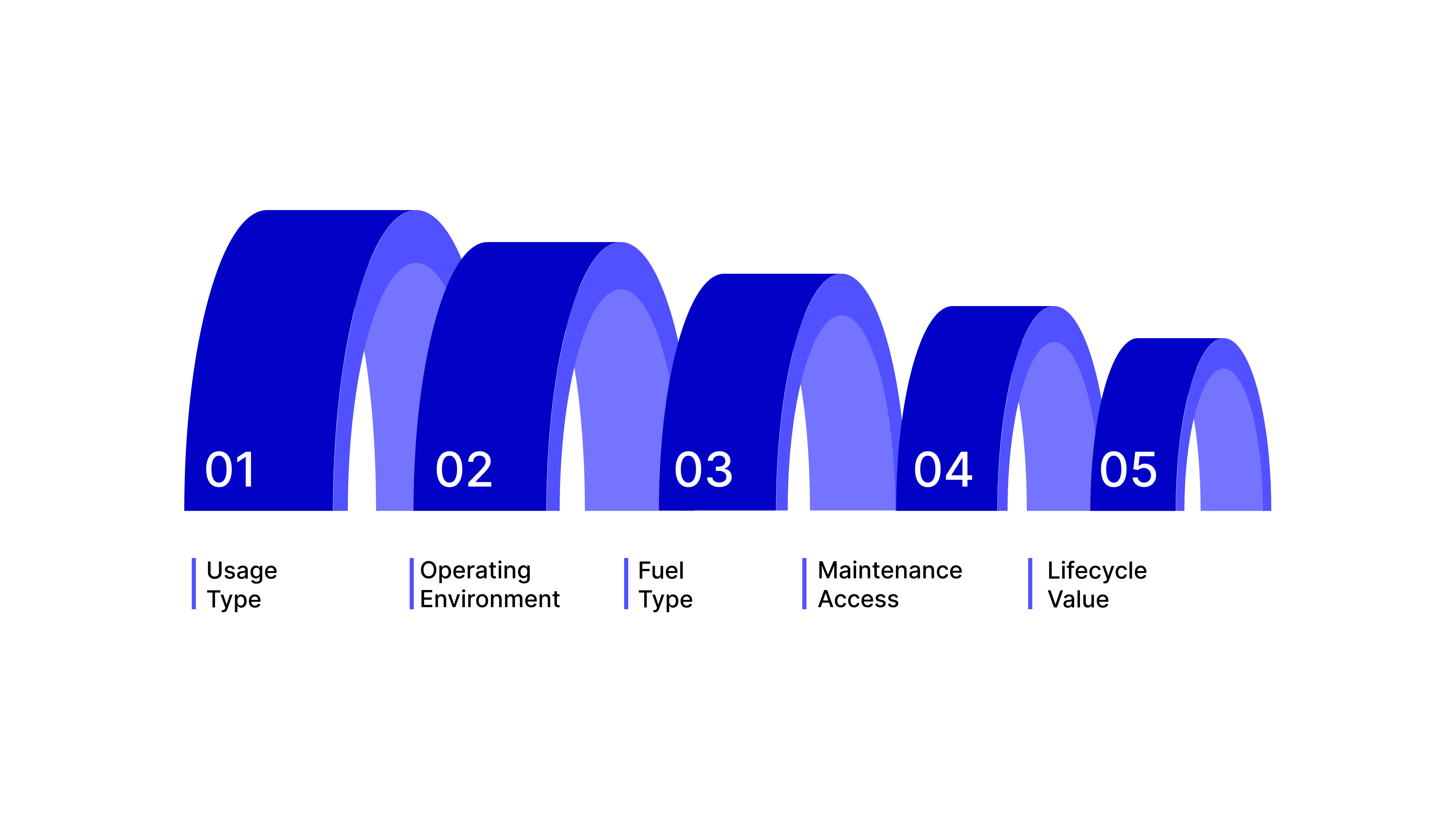
1. Usage Type
Stationary systems can prioritize durability and cost.
Mobile GSE vehicles benefit from lightweight materials like aluminum or HDPE.
2. Operating Environment
Exposure to humidity, temperature swings, and de-icing chemicals can accelerate corrosion.
Tanks used near coastal areas need higher corrosion resistance.
3. Fuel Type
Diesel, gasoline, or mixed fuels react differently with materials.
Blended or biofuels require tanks compatible with chemical additives.
4. Maintenance Access
Materials that allow easier inspection or replacement reduce downtime.
5. Lifecycle Value
A lower-cost tank may require frequent replacement.
Premium materials extend service life and reduce overall maintenance expense.
Fleet managers can achieve consistent reliability by matching material selection to environmental exposure, duty cycle, and service strategy.
How FSR Products Ensure Material Reliability?
FSR Products designs every fuel and surge tank to perform reliably in airport environments where vibration, temperature, and fuel exposure challenge most materials.
Engineering Priorities
Material Integrity: Selection based on corrosion performance, impact strength, and chemical compatibility.
Precision Fabrication: Reinforced welds, protective coatings, and consistent dimensional accuracy for secure fitment.
Operational Testing: Validation under heat, vibration, and long-duty cycles before release.
Design Integration
FSR builds both replacement fuel tanks and surge tanks, ensuring all components within the fuel and cooling systems work together to maintain stability and pressure control.
The company’s commitment to material reliability helps reduce downtime, control maintenance costs, and extend overall fleet service life.
For ground support fleets that depend on constant uptime, FSR’s material-focused engineering delivers dependable, long-term performance without unnecessary maintenance complexity.
Conclusion
Fuel tank material selection determines the reliability and service life of every piece of airport ground support equipment. The correct choice reduces corrosion risk, extends replacement intervals, and ensures safe operation in harsh ramp conditions.
Each material, metallic or composite, has advantages when applied to the right use case.
Partnering with a specialist helps ensure that the choice supports long-term fleet performance.
FSR Products manufactures precision-built replacement fuel and surge tanks designed for airport duty cycles, combining proven materials and tested designs for dependable performance across demanding environments.
FAQs
1. How can I tell if a fuel tank material is starting to corrode or fail?
Look for discoloration, fuel odor, surface rust, or dampness near seams and fittings. These signs indicate corrosion or leaks. Early detection allows scheduled replacement before downtime occurs.
2. Are aluminum fuel tanks worth the higher upfront cost for GSE fleets?
Yes. Aluminum’s lighter weight and corrosion resistance lower maintenance costs over time. It reduces strain on mobile equipment and extends service intervals, especially in humid or coastal airports.
3. What material performs best for GSE equipment exposed to de-icing fluids?
Stainless steel or HDPE performs best. Both resist chemical attack from glycol and salts found in de-icing agents, protecting against pitting and leaks in exposed environments.
4. How do multilayer HDPE tanks help with emission control?
They include inner polymer barriers that prevent vapor escape and meet environmental compliance standards. This feature is especially useful for fleets operating near terminals or in enclosed service areas.
5. When should a fleet manager consider switching tank materials?
When corrosion, leaks, or repeated coating failures occur, upgrading to aluminum or HDPE can cut maintenance costs and improve long-term reliability. Review replacement timing during annual inspections.