When you manage airport ground support equipment, cooling issues tend to surface at the worst possible time. A single overheating vehicle can interrupt ground handling, delay turnarounds, and push your maintenance team into reactive work.
Radiators are often described as heat exchangers, but that description is rarely explained in a way that helps you make better decisions. If you are responsible for sourcing replacement radiators or planning maintenance, this lack of clarity can create uncertainty.
You may be comparing suppliers or parts without fully understanding what role the radiator plays within the broader cooling system.
This article explains what type of heat exchanger a radiator is and why that classification matters for the equipment you manage. The focus stays on practical understanding that supports uptime, sourcing confidence, and maintenance planning.
Key Takeaways
Classification explains behavior. Knowing a radiator is a crossflow heat exchanger helps you understand how it manages heat during real GSE operating patterns.
Not all heat exchangers belong in mobile equipment. Designs meant for stationary systems do not translate well to stop-start, outdoor vehicle use.
Better understanding reduces sourcing risk. Clear classification helps you evaluate suppliers and parts based on suitability, not labels.
Cooling clarity supports uptime. When radiator design aligns with how your equipment operates, maintenance becomes more predictable and disruptions are easier to avoid.
Radiator Is Which Type of Heat Exchanger?
A radiator is a heat exchanger. In vehicle-based applications, including airport ground support equipment, it is most commonly classified as a crossflow heat exchanger.
This classification describes how heat moves through the system, not a theoretical design concept.
How a radiator functions as a crossflow heat exchanger
In your equipment, the radiator operates with two separate mediums moving across each other:
Engine coolant flows through the radiator, carrying excess heat
Air moves across the radiator surface as the vehicle operates
Heat transfers from the coolant to the air
The two fluids never mix
Because the flows move in different directions, this setup is known as crossflow.
Why crossflow matters in real GSE operation
Ground support vehicles do not operate under steady, continuous conditions. They start, stop, idle, and work in short cycles across the airfield. A crossflow radiator supports cooling under these conditions by:
Managing heat during frequent stop-start operation
Supporting temperature stability during idle periods
Allowing consistent heat transfer without relying on long run times
This makes the design well-suited for equipment such as baggage tugs, belt loaders, forklifts, and other airport-only vehicles.
What this understanding helps you do
Knowing that a radiator is a crossflow heat exchanger helps you:
Distinguish radiators from other heat exchanger types used in stationary systems
Evaluate whether a replacement unit aligns with your equipment’s operating pattern
Ask clearer questions when reviewing parts or discussing requirements with specialized suppliers
This foundation becomes especially important when reliability, fitment, and predictable performance matter more than generic specifications.
What does a Heat Exchanger Does in Ground Support Equipment?
In simple terms, a heat exchanger removes unwanted heat from a system so equipment can operate within a safe temperature range. In ground support equipment, this function supports consistent performance and helps prevent unplanned shutdowns.
Heat builds up during normal operation from several sources, including the engine and related systems. If that heat is not managed effectively, it can affect reliability and increase maintenance intervention.
In your equipment, a heat exchanger plays a practical role:
It absorbs excess heat generated during operation
It transfers that heat away from critical components
It helps maintain stable operating conditions across duty cycles
A radiator performs this role continuously while the vehicle is in use. Unlike stationary systems, your equipment may not have long operating windows to stabilize temperatures. The heat exchanger must respond quickly and consistently, even during short or interrupted run times.
How Radiators Transfer Heat in GSE Applications?
In airport ground support equipment, heat transfer needs to work reliably across short duty cycles and frequent stops. The radiator manages this by moving heat away from the engine in a controlled, repeatable way.
Here is how the process works in practice:
As your equipment operates, heat builds up in the engine
Coolant absorbs this heat and circulates through the system
The heated coolant passes through the radiator
Air moving across the radiator surface carries heat away
This exchange happens continuously while the vehicle is running. There is no delay or batch process. The radiator must respond immediately to changes in load, idle time, and ambient conditions.
For you, this means cooling performance depends on how well the radiator supports heat transfer under real operating patterns, not ideal conditions.
Radiators designed specifically for ground support equipment account for these patterns, which is why sourcing from a manufacturer focused on this niche, such as FSR Products, can reduce uncertainty when replacing critical components.
Radiator vs Other Heat Exchanger Types Used in Equipment
Not all heat exchangers are designed for the same role. Understanding how radiators differ helps you avoid comparing solutions that are not meant for mobile ground equipment.
Common heat exchanger types and their typical use
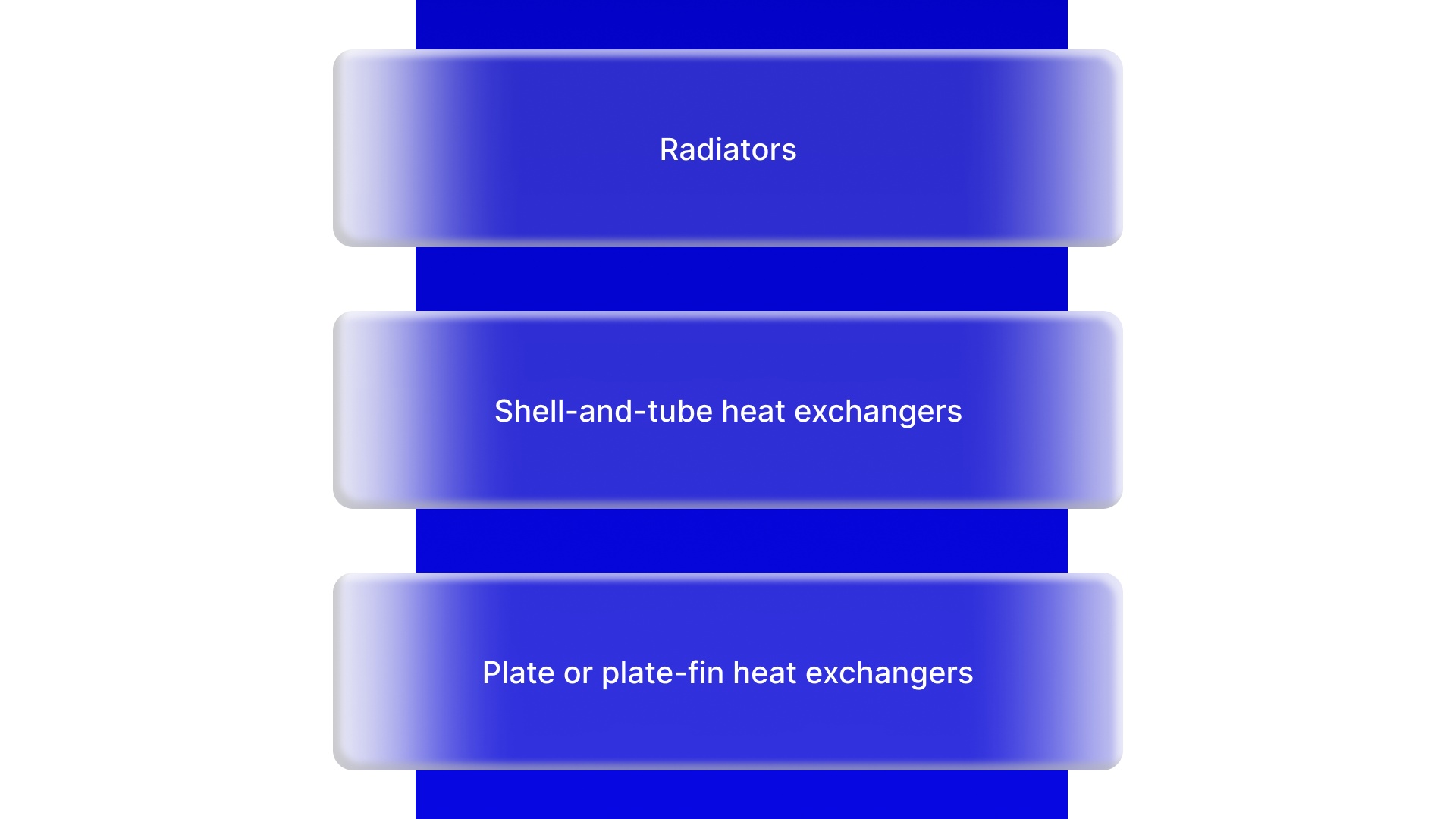
1. Radiators
Used in vehicle-based systems
Transfer heat from the liquid coolant to the air
Suited for stop-start operation and outdoor environments
2. Shell-and-tube heat exchangers
Common in stationary or industrial systems
Designed for continuous operation
Typically larger and less suited to mobile equipment
3. Plate or plate-fin heat exchangers
Often used where space is limited
Common in controlled environments
Less common as a primary engine cooling in GSE vehicles
Why this distinction matters in sourcing
When you are evaluating parts or suppliers, confusion often comes from treating all heat exchangers as interchangeable. In ground support equipment, that assumption can lead to:
Parts that are not aligned with vehicle operating patterns
Cooling solutions designed for steady-state systems
Increased maintenance intervention due to a mismatch
Radiators are used in GSE because they fit the operating reality of mobile airport equipment. Keeping this distinction clear helps you assess whether a proposed replacement is designed for your application, not just labeled as a heat exchanger.
Why Radiators Are Common in Airport Ground Support Equipment?
Radiators are widely used in airport ground support equipment because they align with how this equipment actually operates. The choice is practical, not theoretical.
Ground support vehicles work in conditions that place specific demands on cooling systems:
Frequent stop-start cycles
Short operating windows followed by idle time
Outdoor exposure across varying weather conditions
Tight turnaround schedules where overheating creates immediate disruption
Radiators are well-suited to this environment because they remove heat continuously while the vehicle is operating, without relying on long run times or controlled conditions.
As air moves across the radiator surface, heat is released in real time, helping maintain stable operating temperatures.
For you, this translates into fewer cooling-related interruptions and more predictable equipment behavior.
That predictability is why radiators remain the preferred heat exchanger type for baggage handling equipment, belt loaders, forklifts, and other GSE vehicles that operate airside every day.
Operational Factors That Influence Radiator Selection for GSE
When you are selecting or replacing a radiator, performance on paper matters less than performance in your operating environment. Several practical factors influence whether a radiator will support reliable operation over time.
Key considerations include:
Duty cycle: Equipment that runs in short bursts with frequent stops places different demands on cooling than continuously running systems.
Operating environment: Outdoor exposure, debris, and airflow limitations affect how efficiently heat can be released.
Fitment consistency: Radiators need to match the equipment configuration to avoid installation issues or airflow restrictions.
Replacement lead time: Long or unpredictable lead times increase downtime risk when failures occur.
Supplier specialization: Working with manufacturers focused only on airport ground support equipment radiators, such as FSR Products, helps ensure the product is aligned with GSE operating realities rather than general automotive use.
These factors are often more useful than generic product descriptions when you are making procurement or maintenance planning decisions.
Common Misunderstandings About Radiators and Heat Exchangers
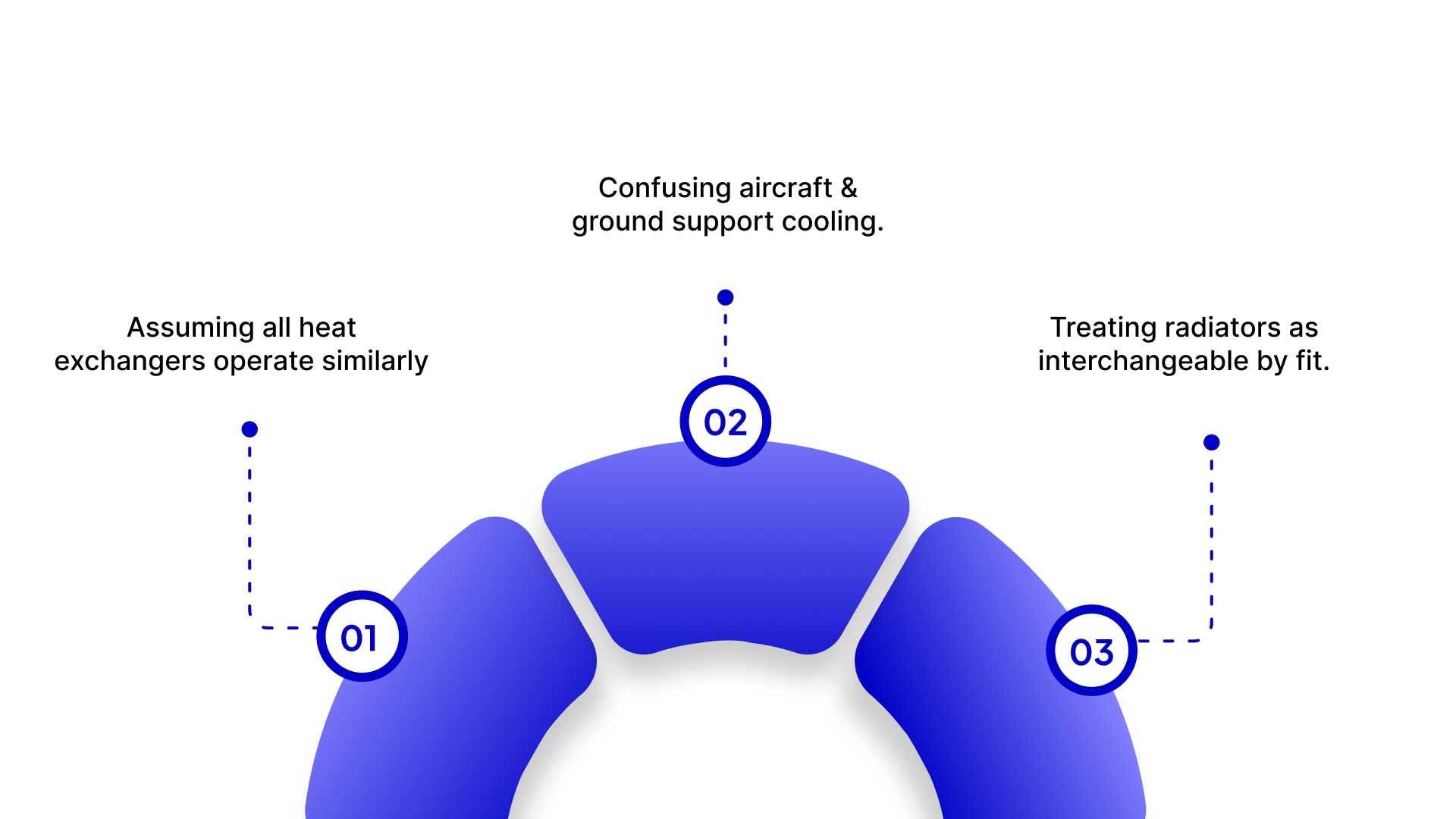
Misunderstandings around radiators usually come from using broad heat exchanger terms without considering the application. These gaps can affect how you assess parts, suppliers, and suitability for ground support equipment.
1. Assuming all heat exchangers work the same way
Heat exchangers are designed around specific operating conditions. A unit intended for continuous, stationary operation behaves very differently from one used in mobile equipment.
Common consequences of this assumption include:
Comparing radiators with industrial heat exchangers that are not designed for stop-start use
Expecting steady-state performance from equipment that operates in short duty cycles
For ground support equipment, the operating pattern matters as much as the heat transfer function.
2. Confusing aircraft systems with ground support equipment cooling
Aircraft cooling systems are engineered for different loads, environments, and constraints. Those designs do not translate to ground vehicles operating on the ramp.
This confusion can lead to:
Referencing specifications or designs that are irrelevant to GSE
Overcomplicating radiator selection with aircraft-specific considerations
For procurement and maintenance decisions, only ground support equipment operating conditions are relevant.
3. Treating radiators as interchangeable if they fit
Fitment alone does not determine suitability. Two radiators may be installed correctly but perform differently in real operation.
Key differences often relate to:
Airflow behavior within the equipment layout
Compatibility with stop-start duty cycles
Alignment with outdoor operating environments
Treating radiators as interchangeable increases the risk of inconsistent cooling performance and unplanned maintenance intervention.
Clarifying these points helps you evaluate radiators based on how they will perform in your equipment, not just how they are labeled.
What This Means for Procurement and Maintenance Planning?
Understanding that a radiator is a crossflow heat exchanger gives you a clearer framework for planning, sourcing, and maintenance decisions.
From a procurement perspective, it helps you:
Compare suppliers based on application focus rather than broad product claims
Identify radiators designed specifically for mobile ground equipment
Reduce the risk of selecting parts intended for unrelated use cases
From a maintenance standpoint, this understanding supports:
More predictable cooling performance across duty cycles
Fewer surprises related to overheating or airflow mismatch
Better alignment between replacement parts and operating conditions
This is where supplier specialization becomes relevant. Manufacturers that focus only on radiators for airport ground support equipment, such as FSR Products, design around these exact requirements rather than adapting general-purpose solutions.
For you, this clarity supports better planning and reduces uncertainty when equipment uptime matters.
Conclusion
A radiator is a heat exchanger, and in ground support equipment, it typically functions as a crossflow heat exchanger. That distinction explains how heat is removed during stop-start operation, idle periods, and outdoor use on the ramp.
For you, this understanding helps separate radiators designed for mobile GSE from heat exchangers built for stationary or unrelated applications.
It supports better sourcing decisions, clearer supplier evaluation, and fewer surprises tied to cooling performance.
When radiator selection aligns with how your equipment actually operates, maintenance planning becomes more predictable, and downtime risk is easier to manage. Manufacturers that focus exclusively on airport ground support equipment radiators, such as FSR Products, build around these realities.
If you are evaluating radiators for your fleet, you can contact us to discuss application-specific requirements.
FAQs
1. Is a radiator always classified as a crossflow heat exchanger?
In most vehicle-based applications, including airport ground support equipment, radiators are designed as crossflow heat exchangers. Other configurations exist in theory, but crossflow suits stop-start operation, and airflow-driven cooling are common in GSE.
2. Can a radiator be replaced with another type of heat exchanger?
In ground support equipment, radiators are selected because they match mobile operating conditions. Other heat exchanger types are typically designed for stationary or controlled environments and are not practical substitutes.
3. Does radiator classification affect maintenance planning?
Yes. Understanding how a radiator transfers heat helps you anticipate cooling behavior under real duty cycles, which supports more predictable maintenance planning and fewer overheating-related issues.
4. Are radiators used in ground support equipment similar to aircraft cooling systems?
No. Aircraft cooling systems are engineered for different loads and operating conditions. Radiators used in GSE are designed specifically for vehicle-based, airside operation.
5. Why do some replacement radiators perform differently even when they fit?
Fitment alone does not determine performance. Differences in airflow handling and duty cycle suitability can affect how consistently a radiator manages heat in your equipment.