A radiator leak can turn a dependable Freightliner Cascadia into an unscheduled stop and a costly delay. Whether it starts as a faint coolant smell or a small puddle under the frame, even minor leaks quickly escalate into overheating, downtime, and secondary damage to vital components.
While this problem is common in Freightliner Cascadia trucks, the underlying causes mirror what airport ground support equipment (GSE) fleets face daily: continuous operation, vibration, and heat cycles that test every joint, seal, and weld.
This guide breaks down the main causes, diagnostic methods, and prevention strategies for radiator leaks, with insights that apply equally to Freightliner trucks and GSE reliability management.
Key Takeaways
Radiator leaks reveal operational weak points. Early detection saves hours of downtime for both highway trucks and ground support fleets.
Corrosion and vibration are universal enemies. Addressing them through proper materials and preventive inspection reduces long-term costs.
Preventive maintenance is cheaper than reactive repairs. Small leaks can escalate into coolant contamination or engine damage if ignored.
FSR Products builds high-performance aluminum radiators designed to resist leaks, extend uptime, and protect critical GSE from costly operational failures.
Why Radiator Leaks Happen in Heavy-Duty Vehicles
Radiator leaks rarely appear out of nowhere. They’re the result of gradual wear, environmental exposure, or maintenance practices that let minor stress points grow into major failures.
1. Vibration and structural fatigue
Heavy-duty vehicles like the Freightliner Cascadia, and GSE units such as baggage tugs and aircraft tow tractors experience constant vibration.
Over time, this movement loosens hose clamps, weakens welds, and cracks solder joints, especially where plastic tanks meet metal cores.
2. Thermal cycling and pressure stress
Each start-up and cool-down expands and contracts radiator materials. Repeated cycles weaken seam integrity, particularly in older copper or brass cores. When coolant pressure builds, weakened joints begin to seep.
3. Coolant quality and corrosion chemistry
Improper coolant mix or contamination accelerates internal corrosion. Once corrosion begins, leaks often form in tubes and core junctions, hidden until coolant loss becomes visible.
4. Environmental and chemical exposure
On airport ramps, radiators face more than temperature stress. Jet exhaust heat, moisture, and de-icing chemicals corrode fins and tanks faster than typical road use.
5. Material and design factors
Lower-grade materials and thin-walled designs in cost-optimized radiators often lack vibration tolerance. Using FSR Products GSE radiators, designed for high-cycle durability, reduces the risk of fatigue-related leaks and extends service life in demanding conditions.
Key Symptoms of a Radiator Leak
Detecting radiator leaks early prevents unplanned downtime and protects other cooling components. Whether managing a Freightliner Cascadia or airport GSE vehicles like baggage tugs and aircraft loaders, these are the most reliable signs to watch for.
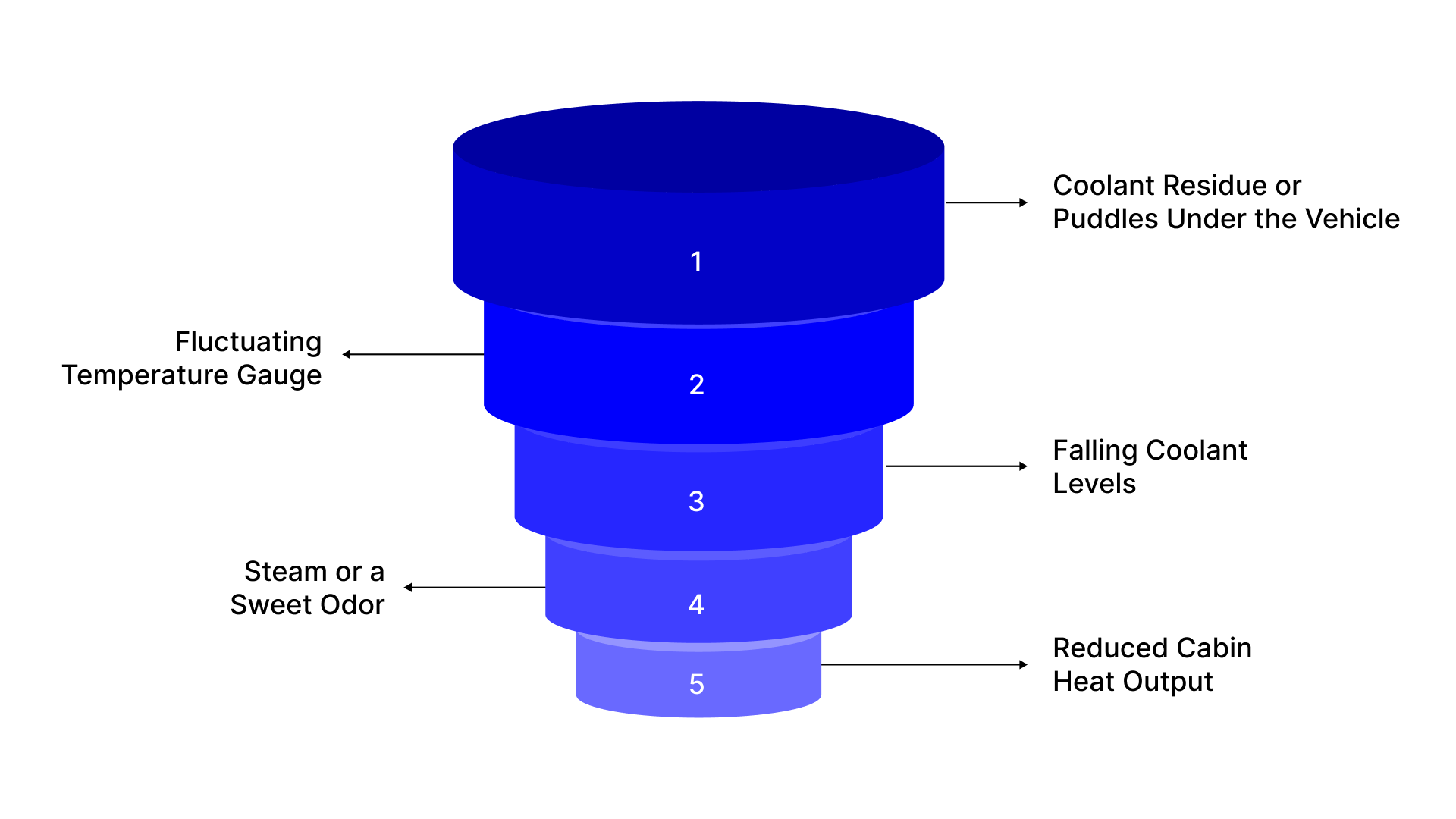
1. Coolant Residue or Puddles Under the Vehicle
Look for wet spots or dried, white-green residue beneath the radiator or hose connections.
Even small coolant drips indicate pressure loss that will worsen under heat and load.
2. Fluctuating Temperature Gauge
Inconsistent temperature readings often point to coolant loss or air entering the system.
For GSE vehicles that idle for long periods, temperature instability can escalate quickly to overheating.
3. Falling Coolant Levels
Needing frequent top-ups without visible leaks usually means a pinhole leak or seam crack.
This is common in older radiators or systems under constant vibration.
4. Steam or a Sweet Odor
The smell of burning coolant or visible vapor around the engine bay signals an external leak.
Always inspect tanks and fittings during idle cycles when vapor becomes more visible.
5. Reduced Cabin Heat Output
Cool air from the heater indicates low coolant flow or trapped air pockets, often linked to internal leaks.
In GSE, this can also affect defrost systems, reducing operator comfort and visibility.
Leaks may appear minor, but they signal a system pressure imbalance, a root cause of future overheating. Routine inspection and early response can save multiple service hours and costly radiator replacements.
Diagnosing a Radiator Leak Accurately
An accurate diagnosis prevents guesswork and unnecessary part replacements. Most radiator leaks can be pinpointed using basic inspection tools and a structured testing process.
Tools and Methods for Leak Detection
Pressure Testing: Use a radiator pressure tester or cap adapter to simulate system pressure. Monitor the gauge; a slow pressure drop signals a leak.
Visual Inspection: Examine the radiator seams, hose clamps, and tank corners for stains, corrosion, or coolant trails.
UV Dye or Soapy Water: Adding fluorescent dye to the coolant helps identify tiny leaks under UV light. Alternatively, apply soapy water to suspected areas and watch for bubbles.
Thermal Imaging: Infrared thermometers can detect uneven heat distribution, showing where coolant isn’t flowing properly due to leaks or blockages.
Common Leak Points to Inspect
Radiator core seams and end caps
Hose junctions and quick-connect fittings
Surge tank and overflow reservoir cracks
Transmission cooler fittings are integrated into the radiator housing
Verification and Repressurization
After repairs or replacements, re-pressurize the system and monitor for residual leaks before putting the equipment back in service.
This step is essential to avoid repeat failures, especially in pushback tractors, belt loaders, or refueling trucks that experience frequent temperature swings and vibration.
Durability-focused designs, like FSR Products GSE radiators, use reinforced seams and thicker weld junctions to handle these pressure cycles without failure, supporting higher uptime in fleet operations.
The Real Cost of Radiator Leaks
A radiator leak is a maintenance issue as well as an operational and financial one. For fleets like the Freightliner Cascadia or airport ground support equipment (GSE), even a small coolant loss can ripple through maintenance schedules and equipment availability.
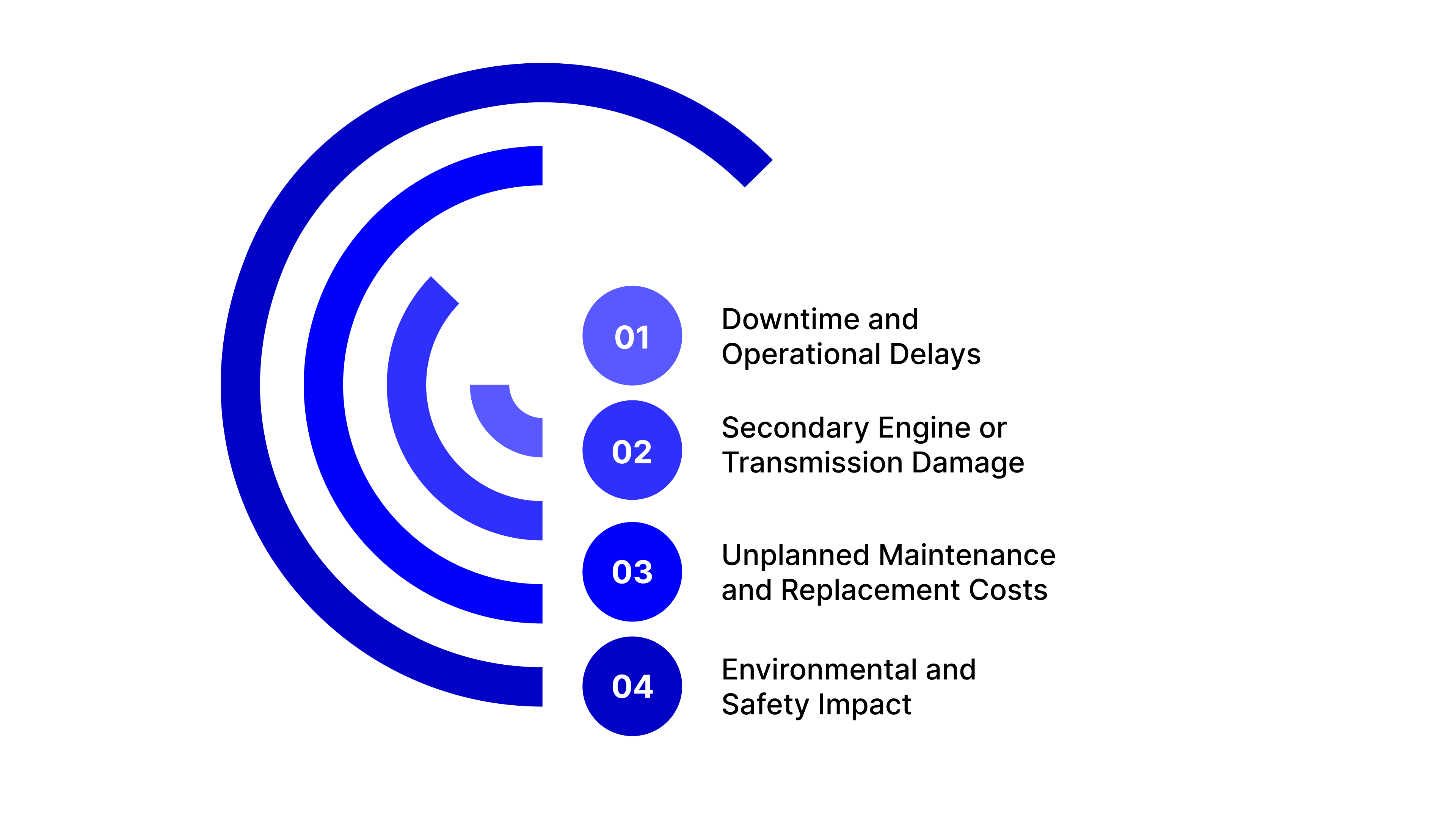
1. Downtime and Operational Delays
A leaking radiator sidelines the vehicle, disrupting logistics and groundoperations.
For GSE fleets, this could mean a baggage tractor stuck on the ramp or a pushback unit offline during peak turnaround, both of which create chain delays that affect flight schedules.
2. Secondary Engine or Transmission Damage
Low coolant levels lead to overheating, which can warp cylinder heads or damage turbo seals.
In combined cooling systems, coolant loss may also affect transmission oil temperature, compounding the repair cost.
3. Unplanned Maintenance and Replacement Costs
Emergency repairs consume resources and labor that could have been allocated to scheduled servicing.
Repeated leaks often signal fatigue or corrosion in the radiator core, where a high-quality aluminum replacement from FSR Products can reduce recurrence and long-term costs.
4. Environmental and Safety Impact
Coolant spills increase safety hazards on ramps and may require cleanup procedures under EPA compliance.
Preventing leaks protects both staff and the environment.
Insight: Downtime and reactive maintenance typically cost 5–10 times more than preventive inspection and quality replacement planning.
Preventing Radiator Leaks Before They Start
Most radiator leaks are avoidable with proactive care. Routine inspections and fluid maintenance can eliminate the majority of early failures in both trucks and airport GSE, like belt loaders, refuelers, and cargo tractors.
1. Regular Inspection Routine
Check coolant levels weekly: Ensure levels are between the “MIN” and “MAX” marks.
Inspect hose clamps and joints monthly: Look for corrosion, vibration fatigue, or loosened fittings.
Examine the radiator core: Remove debris buildup, which restricts airflow and causes overheating.
Pressure test quarterly: Detect early leaks before they affect performance.
2. Maintain Coolant Quality
Use the correct coolant type: Mixing incompatible formulas (e.g., green and red) can corrode the core.
Replace coolant at OEM intervals: Old coolant loses anti-corrosion protection.
Avoid tap water: Always mix with distilled water to prevent mineral buildup.
3. Protect Against Environmental Damage
Clean radiators regularly to remove salt, dust, or de-icing residues common in airport environments.
For equipment exposed to jet exhaust or chemicals, consider radiators from FSR Products, which use corrosion-resistant coatings and vibration-tolerant construction.
4. Schedule Preventive Replacements
Replace aging radiators before visible failure, typically every 4–5 years for high-duty fleets.
Plan replacements during downtime windows to prevent operational disruption.
Quick Insight: Preventive inspection transforms radiator maintenance from a reactive cost center into a reliability strategy. Fleets that invest in a structured coolant system can report longer equipment life and fewer service interruptions.
What GSE Maintenance Teams Can Learn from Freightliner Failures
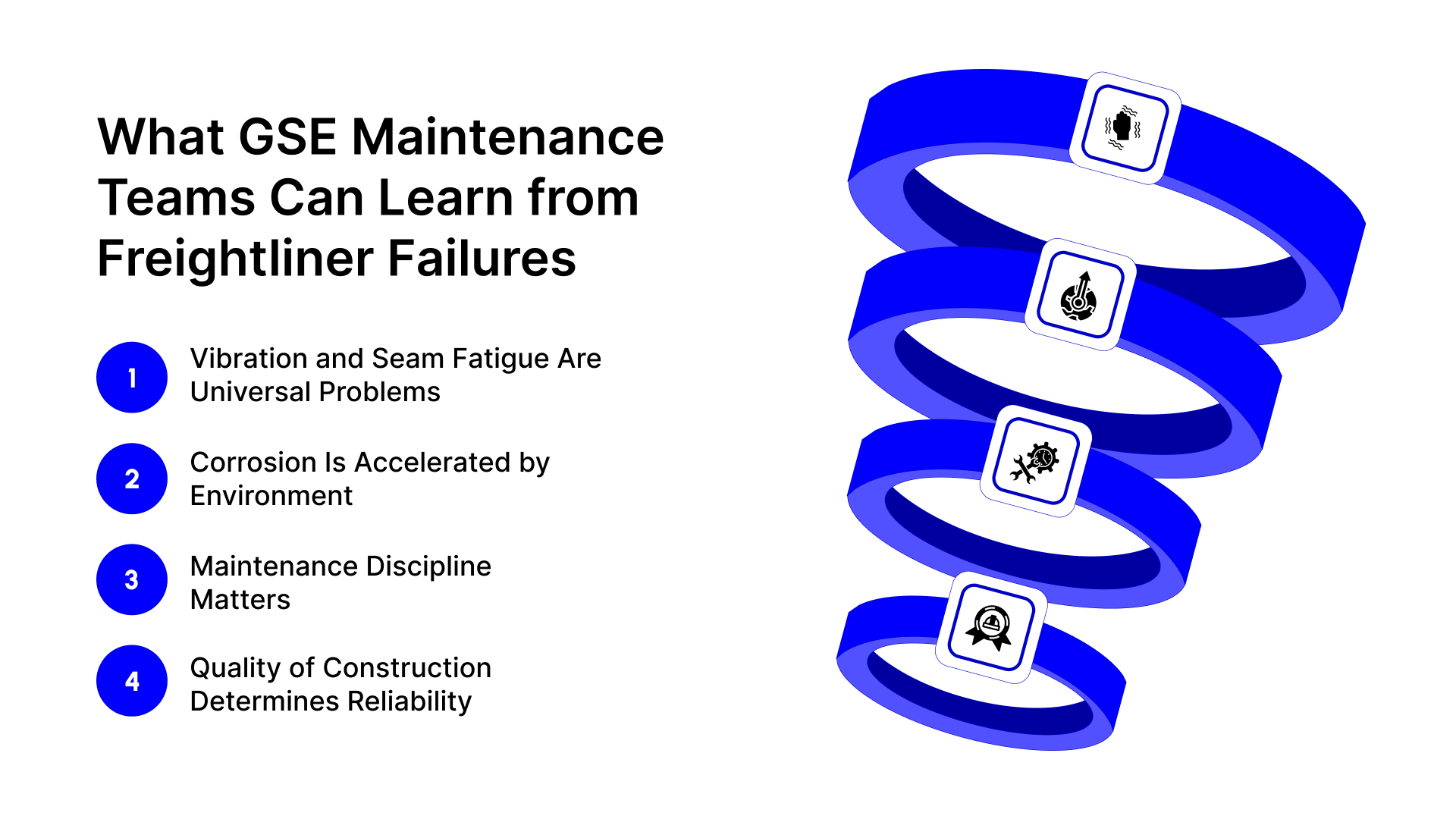
Radiator leaks in the Freightliner Cascadia reveal failure patterns that airport maintenance teams can learn from.
The same stress factors, heat, vibration, and environmental exposure, affect every airport ground support vehicle, from pushback tractors to catering trucks and fuel dispensers.
1. Vibration and Seam Fatigue Are Universal Problems
Truck radiators often fail at weld seams or joint points after long vibration exposure.
GSE equipment experiences identical stress on the ramp, where engines idle for hours or operate at low speed on uneven pavement.
2. Corrosion Is Accelerated by Environment
Road salt and moisture damage Freightliner radiators the same way de-icing chemicals attack GSE cores.
Aluminum units with protective coatings resist these corrosive conditions far better than older copper/brass designs.
3. Maintenance Discipline Matters
Irregular coolant checks or skipped inspections are the top contributors to leaks across both fleets.
Instituting a weekly coolant inspection routine reduces downtime risk across all equipment types.
4. Quality of Construction Determines Reliability
Using low-grade aftermarket radiators often results in early failure.
FSR Products builds radiators specifically for the harsh vibration and thermal cycles of airport ground vehicles, ensuring consistent uptime and predictable maintenance schedules.
How High-Quality Radiators Prevent Leaks Long-Term
Preventing radiator leaks starts with better design, stronger materials, and precision manufacturing.
Modern aluminum radiators designed for industrial and airport service are engineered to withstand both thermal and mechanical fatigue over thousands of duty cycles.
1. Reinforced Core and Seam Design
Thicker tubes and brazed joints distribute stress evenly, reducing the risk of fatigue cracks.
Internal reinforcements prevent expansion stress that typically causes seam leaks in copper/brass units.
2. Corrosion-Resistant Materials and Coatings
Aluminum resists oxidation naturally, while specialized coatings add another layer of protection against de-icing fluids and moisture.
This extends radiator lifespan even in refuelers, belt loaders, and tow tractors exposed to constant humidity.
3. Improved Mounting and Vibration Control
Rubber isolation mounts and reinforced brackets reduce vibration transfer from the chassis to the radiator.
These features prevent stress fractures around tank joints and weld points.
4. Compatibility with Coolant Chemistry
Proper material pairing prevents electrochemical reactions that corrode cores internally.
Radiators from FSR Products are tested for optimal coolant compatibility, reducing the risk of galvanic corrosion over time.
5. Engineered for Lifecycle Value
Investing in durable, fit-for-purpose radiators cuts reactive maintenance, improves uptime, and lowers total cost of ownership.
For fleets managing mixed equipment, from Freightliner-based service trucks to ground loaders, standardizing on FSR’s GSE radiators ensures reliability across operations.
Quick Fleet Maintenance Checklist
Consistent inspection is the simplest way to avoid radiator failures — in both Freightliner Cascadia trucks and airport GSE such as baggage tractors, pushback tugs, and belt loaders.
Use this checklist as part of every maintenance cycle to detect issues before they turn into costly downtime.
Inspection Area | What to Check | Frequency | Why It Matters |
Coolant Level | Between MIN–MAX marks; refill with the correct mix | Weekly | Identifies leaks early |
Radiator Core | Dirt, corrosion, and fin blockage | Monthly | Prevents overheating |
Hoses & Clamps | Tightness, cracks, and corrosion | Monthly | Stops vibration leaks |
Coolant Color & Quality | Check for discoloration or particles | Quarterly | Prevents internal corrosion |
Pressure Test | System pressure retention under load | Annually | Confirms overall system integrity |
Mounting Brackets | Check for loosened bolts or vibration wear | Quarterly | Extends radiator and chassis life |
A proactive inspection culture minimizes unplanned maintenance and ensures every vehicle, from ramp support to linehaul, stays mission-ready.
Conclusion
Radiator leaks may start small, but the consequences can ripple through operations, from unplanned repairs to flight delays.
Whether managing a Freightliner Cascadia or a fleet of airport ground support vehicles, leak prevention comes down to two factors: consistent inspection and quality components.
Aluminum radiators engineered for industrial environments, like those from FSR Products, are built to handle vibration, corrosion, and high-duty cycles that cause standard units to fail.
For expert guidance or precision-built replacements, contact us to strengthen your cooling system’s long-term performance.
FAQs
1. What causes radiator leaks in Freightliner Cascadia trucks?
Radiator leaks usually result from vibration fatigue, corrosion, or coolant chemical imbalance. In Freightliner Cascadia trucks, seam wear and hose clamp failure are common. The same issues also affect airport ground equipment exposed to heat, moisture, and vibration.
2. How can I quickly identify a radiator leak?
Watch for coolant puddles, steam, or a sweet smell under the hood. Check coolant levels regularly. Pressure testing and UV dye inspection help confirm hidden leaks before serious overheating occurs.
3. Can a radiator leak be repaired temporarily?
Yes, sealants or patching can provide short-term relief, but they’re only stopgaps. For high-duty fleets, including airport ground vehicles, replacing the radiator with a corrosion-resistant aluminum model ensures lasting performance.
4. Why do aluminum radiators perform better in heavy-duty fleets?
Aluminum offers superior corrosion resistance, lighter weight, and better vibration tolerance compared to copper or brass. Radiators from FSR Products are engineered with reinforced cores and coatings that prevent fatigue and extend service life in demanding GSE environments.
5. How can I prevent radiator leaks in the future?
Follow a structured inspection plan: check coolant levels weekly, test system pressure annually, and replace radiators proactively. Cleaning debris and using the right coolant blend also slows corrosion and extends system integrity.