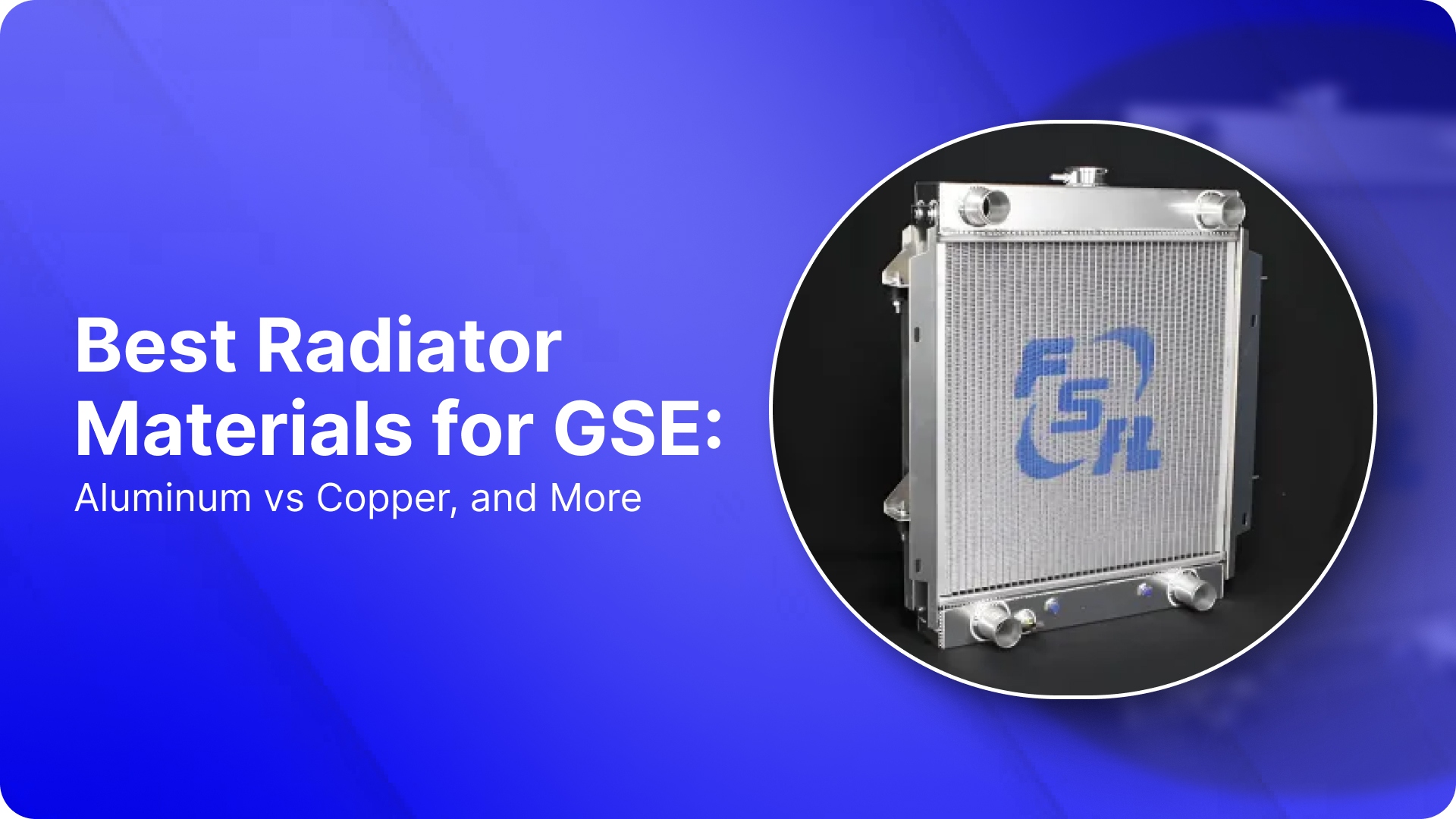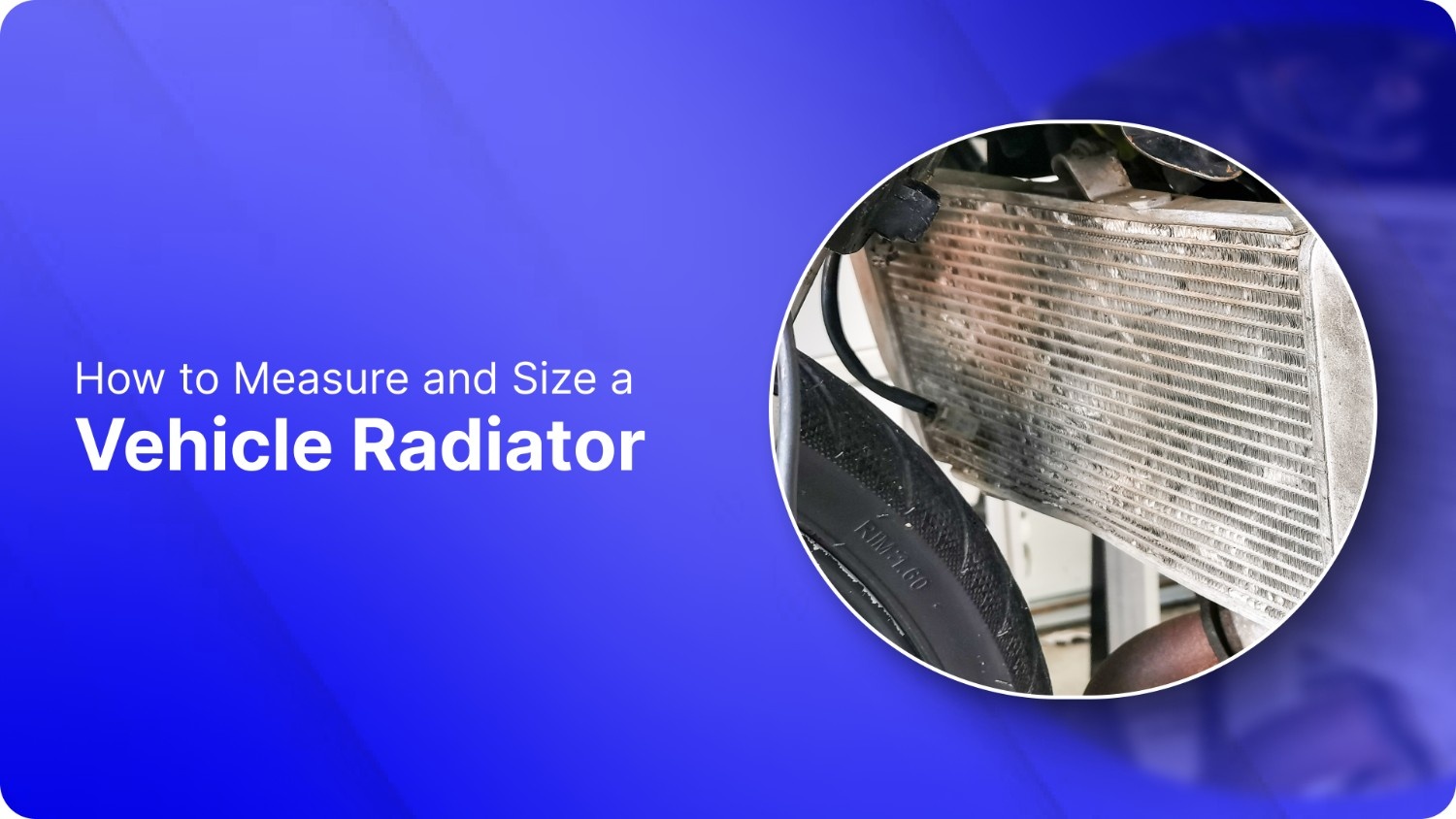
A radiator’s main function is to remove engine heat and keep operating temperatures within safe limits. The measure of how well it does that is called heat dissipation.
For maintenance and engineering managers, knowing how heat dissipation works helps evaluate radiator performance and make better decisions when choosing replacements or upgrades.
In airport ground support equipment (GSE), consistent heat removal directly affects uptime and reliability.
This guide explains radiator heat dissipation in simple, clear terms. It introduces one practical formula to understand the principle and highlights the real-world factors that influence radiator performance in heavy-duty and GSE applications.
Key Takeaways
Heat dissipation defines radiator performance. The faster the heat transfers from the coolant to the air, the more stable the engine operation remains.
The simple relationship (Q = U × A × ΔT) explains that performance depends on surface area, airflow, and temperature difference.
Consistent upkeep prevents downtime. Regular cleaning and coolant checks sustain thermal balance and prevent costly failures.
FSR Products radiators combine efficient aluminum cores with rugged construction to maintain optimal heat transfer and reduce maintenance disruptions for GSE fleets.
What Is Radiator Heat Dissipation?
Radiator heat dissipation refers to the transfer of heat from engine coolant to the surrounding air. As coolant circulates through the system, it absorbs heat from the engine block. When it reaches the radiator, that heat moves through thin metal tubes and fins before escaping into the air.
In essence, the radiator acts as a heat exchanger between hot liquid and cooler air. The faster and more efficiently this process occurs, the more stable the operating temperature remains.
A radiator’s heat dissipation capacity defines how much heat it can release in a given period. The higher the capacity, the lower the risk of overheating and downtime.
For ground support vehicles that idle for long hours under load, such as pushback tugs or catering trucks, consistent heat dissipation is critical for maintaining safe, efficient operation on the ramp.
The Simple Formula Behind Radiator Heat Dissipation
The efficiency of a radiator can be understood using a basic heat transfer equation that engineers rely on to measure cooling performance:
Q = U × A × ΔT
Where:
Q: Total heat removed (Watts or BTU/hr)
U: Overall heat-transfer coefficient, indicating how effectively the radiator moves heat through metal and fins
A: Surface area available for air contact
ΔT: Temperature difference between the coolant and ambient air
This relationship shows three critical influences on radiator performance:
Surface area (A): A larger area equals more exposure to airflow, which improves heat rejection.
Temperature difference (ΔT): The greater the gap between coolant and air temperature, the faster the heat escapes.
Design and material (U): High-quality aluminum with clean, unobstructed fins transfers heat better than corroded or clogged surfaces.
Example in Practice
Consider an airport baggage tug operating for long periods in summer. If the coolant temperature is 90°C and the ambient air is 30°C, the ΔT is 60°C.
When dust buildup blocks fins, the effective surface area (A) decreases, lowering heat transfer (Q).
Cleaning the fins or upgrading to an FSR Products radiator with higher fin density can increase U and restore full cooling capacity.
A simple understanding of this formula helps maintenance teams link real-world factors, like airflow, cleanliness, and material quality, to measurable radiator performance.
Factors That Affect Radiator Heat Dissipation
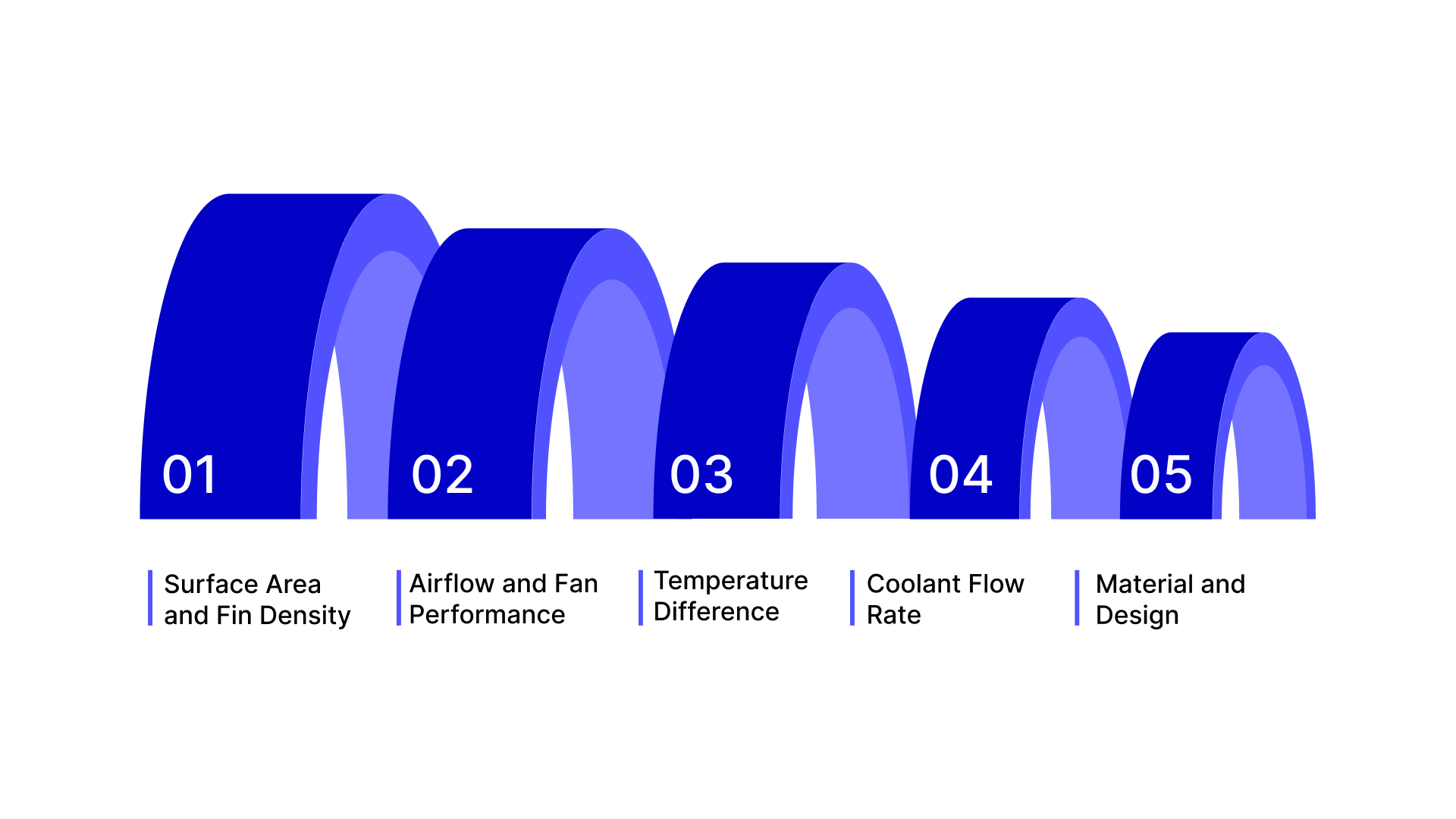
Several physical and operational elements determine how effectively a radiator removes heat. Each factor influences how much energy is transferred from the coolant to the air and how stable the operating temperature remains.
1. Surface Area and Fin Density
Larger surface area allows greater air contact, improving heat rejection.
Fins increase that area without increasing size.
Too few fins reduce efficiency; too many restrict airflow.
For airport vehicles, dust and debris can clog fins quickly, reducing performance.
2. Airflow and Fan Performance
Air must flow smoothly through the radiator core.
Weak fans or blocked grilles reduce cooling capacity.
Even small airflow losses can raise coolant temperature in belt loaders or refueling trucks that run for hours.
3. Temperature Difference (ΔT)
Heat moves faster when the coolant is much hotter than the ambient air.
High ramp temperatures narrow this gap, lowering efficiency.
Maintaining clean fins and proper fan speed helps offset that limitation.
4. Coolant Flow Rate
Steady coolant flow ensures even heat pickup and release.
Too slow, and the system overheats; too fast, and the coolant spends less time in contact with radiator surfaces.
Balanced flow produces consistent temperatures across the system.
5. Material and Design
Aluminum conducts heat effectively and resists corrosion.
Modern aluminum cores with strong welds outperform older copper or brass types under vibration.
FSR Products designs radiators with reinforced cores and vibration-tolerant joints to preserve cooling efficiency in continuous-duty airport environments.
Real-World Application: GSE and Heavy-Duty Fleets
Heat dissipation is not only a design metric; it directly affects operational reliability. Every minute a vehicle overheats translates into lost time and delayed service.
In airport ground support fleets, the radiator’s ability to release heat determines how long each unit can operate without interruption.
Baggage tractors often idle for long periods between loads.
Pushback tugs handle short bursts of high power followed by waiting cycles.
Catering and fuel trucks operate continuously in high ambient temperatures.
These duty cycles place constant stress on the cooling system. When airflow paths clog or coolant quality declines, heat dissipation drops sharply, leading to temperature spikes and unplanned downtime.
Upgrading to high-efficiency aluminum radiators with optimized fin geometry, such as those produced by FSR Products, helps stabilize operating temperatures, lower failure risk, and extend service life across mixed GSE fleets.
Simple Ways to Improve Radiator Heat Dissipation
Improving radiator performance does not always require redesigning the system. Consistent maintenance and a few targeted adjustments can significantly increase heat transfer efficiency and reduce the chance of overheating.
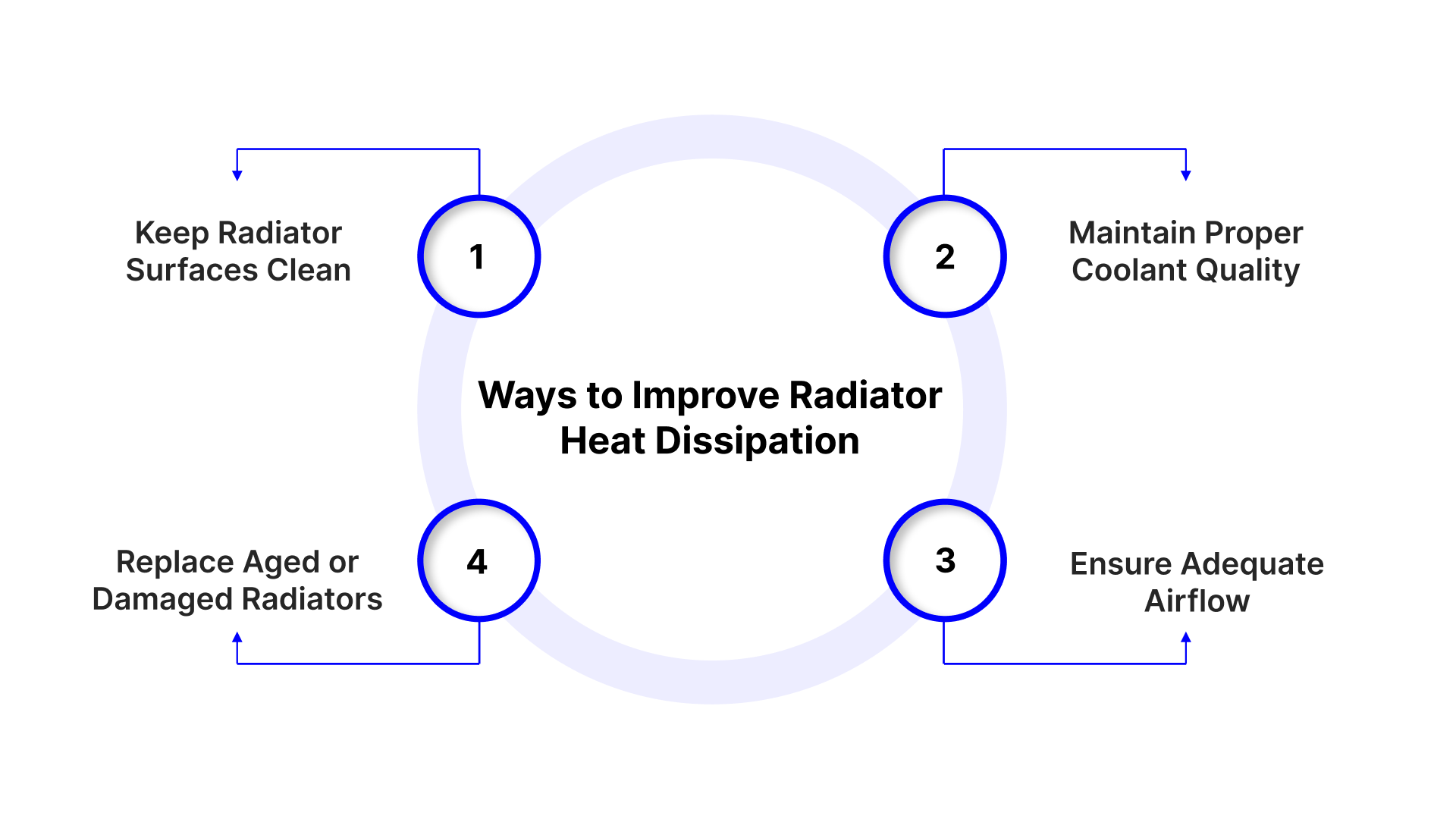
1. Keep Radiator Surfaces Clean
Dust, grease, and debris act as insulation, blocking airflow.
Clean the fins regularly using low-pressure air or water to restore full cooling capacity.
On airport ramps, cleaning frequency should increase during summer or heavy traffic periods.
2. Maintain Proper Coolant Quality
Use the coolant type recommended by the equipment manufacturer.
Avoid mixing formulas or adding tap water; minerals cause internal corrosion.
Replace coolant at defined intervals to maintain its thermal conductivity.
3. Ensure Adequate Airflow
Inspect fans, belts, and shrouds for wear or misalignment.
Check that protective grilles and guards do not restrict air movement.
A small airflow drop can raise coolant temperature under load conditions.
4. Replace Aged or Damaged Radiators
Metal fatigue, corrosion, or clogged tubes reduce the heat transfer rate.
Replacing worn radiators restores full efficiency.
Radiators from FSR Products feature corrosion-resistant coatings and high-density cores that maintain cooling performance even under continuous vibration.
Common Misconceptions About Radiator Heat Dissipation
Some long-standing beliefs about radiator performance can lead to ineffective maintenance or poor decisions when selecting replacements. Clarifying these helps ensure accurate performance expectations.
1. Bigger Radiators Always Cool Better
Size alone does not guarantee better cooling.
Efficiency depends on airflow, coolant flow, and fin design.
Oversized units can reduce temperature control accuracy and slow warm-up times.
2. More Airflow Always Improves Cooling
Excessive fan speed can reduce air contact time and increase energy use.
Balanced, directed airflow achieves better heat transfer without power loss.
3. Coolant Type Has Minimal Impact
The right coolant composition directly affects heat absorption and corrosion prevention.
Poor-quality or mixed coolants reduce dissipation efficiency and damage internal surfaces.
4. Material Choice Is Only About Cost
Radiator material determines thermal performance and durability.
Radiators, such as those from FSR Products, combine strong conductivity with resistance to corrosion and vibration, reducing total lifecycle cost for GSE operators.
Conclusion
Radiator heat dissipation may sound technical, but its impact is practical and measurable. Every piece of ground equipment relies on efficient cooling to protect engines, reduce service interruptions, and keep airport operations on schedule.
Understanding what affects heat transfer allows maintenance teams to address small issues before they become major failures. Choosing radiators designed for strong thermal performance ensures consistent results in demanding ramp environments.
For fleets that depend on durability and performance, FSR Products offers precision-built radiators that combine high heat dissipation with long service life, a dependable choice for reliable cooling in GSE applications.
FAQs
1. How can I tell if my radiator is not dissipating heat effectively?
Look for gradual temperature increases during normal operation, reduced airflow through fins, or coolant that runs hotter than expected. Early heat retention often shows as small performance drops before full overheating occurs.
2. Do different radiator materials affect how much heat is released?
Yes. Aluminum radiators release heat faster due to higher thermal conductivity and lighter construction. They also resist corrosion better than copper or brass units, making them ideal for airport ground support vehicles.
3. What design factors improve radiator heat dissipation in heavy-duty fleets?
Fin density, core size, and coolant path design all influence cooling performance. Wider cores with efficient airflow paths and smooth coolant flow increase heat removal without increasing size.
4. Why does radiator cleanliness matter for heat transfer?
Even a thin layer of dust, oil, or debris insulates fins and blocks airflow, cutting heat dissipation by 20–40 percent. Cleaning fins regularly helps maintain full thermal efficiency.
5. How can maintenance teams improve heat dissipation without changing the radiator?
Check airflow restrictions, verify coolant quality, inspect fan operation, and remove debris buildup. These small actions help restore original performance without hardware replacement.